
Water Rings on Marble: How to Remove and Prevent Them
The popular advice to scrub every pale ring with a hard-water remover is exactly what can turn a simple surface deposit into lasting damage. Water rings on marble aren't all the same: some are mineral residue that can be lifted safely, while others are acid etching that has dulled the stone itself. Diagnose first. A stronger cleaner isn't a safer shortcut.
Table of Contents
- Why Water Rings on Marble Are Different From Other Stains
- Diagnosing the Ring Before You Clean
- Safe Removal Methods for Mineral Residue
- When the Ring Is Actually Etching
- Preventing Water Rings From Coming Back
- Quick Decision Checklist and When to Call a Professional
Why Water Rings on Marble Are Different From Other Stains
Marble isn't just a hard surface with a decorative finish. Its main component is calcium carbonate, and that chemistry makes it vulnerable to acids. When a droplet of mineral-rich water evaporates, it can leave calcium and magnesium deposits on the polished surface. The resulting pale ring may look like a stain, but it can be residue sitting on the marble rather than damage inside it.
That distinction matters in Indian homes, where borewell or untreated groundwater may leave deposits around taps, vases, planters, shower fittings, and countertop appliances. A groundwater study in marble-mining areas of Rajasthan measured calcium concentrations from 6 mg/L to 405 mg/L, and approximately 60% of sampled locations exceeded the Bureau of Indian Standards acceptable calcium level of 75 mg/L. The study also found carbonate concentrations from 0 to 120 mg/L, with an average of 33 mg/L, and connected the higher calcium levels to mineral leaching from marble mining and waste-dumping areas (groundwater quality assessment in Rajsamand district).
The cleaner can cause the real damage
A mineral deposit may be removable. An acid-etched patch isn't a deposit, even if it looks similar. Vinegar, lemon juice, acidic descalers, and some toilet cleaners react with marble's calcium carbonate. They can dissolve the polished surface and leave a dull mark that resembles a water ring.
That's the trap: you see a pale mark, reach for a stronger cleaner, and remove some residue while etching the stone beneath or around it. The residue problem has now become a surface-finish problem. Don't treat every pale mark as limescale.
Practical rule: Start with diagnosis, not scrubbing. A water ring's appearance alone doesn't tell you what caused it.
Moisture can also penetrate marble's pores, especially when water sits on the surface or spills recur. Research on heritage Makrana marble describes how water and acid rain can react with calcium carbonate, leach stone constituents, and contribute to discoloration and weakening. Marble's porosity also allows liquids to move through capillary action, which can leave powdery efflorescence or contribute to deeper staining over time (research on moisture and heritage marble).
The practical takeaway is simple. A recent ring may be mineral residue, but persistent dampness and aggressive cleaning can create more serious problems. Identify what you're looking at before choosing a remedy.
Diagnosing the Ring Before You Clean
Before opening a cleaner, inspect the mark. You don't need to scrape it, test it with acid, or scrub hard. Use light, touch, and a damp cloth to work out whether you're dealing with a surface deposit or a change in the marble's polish.
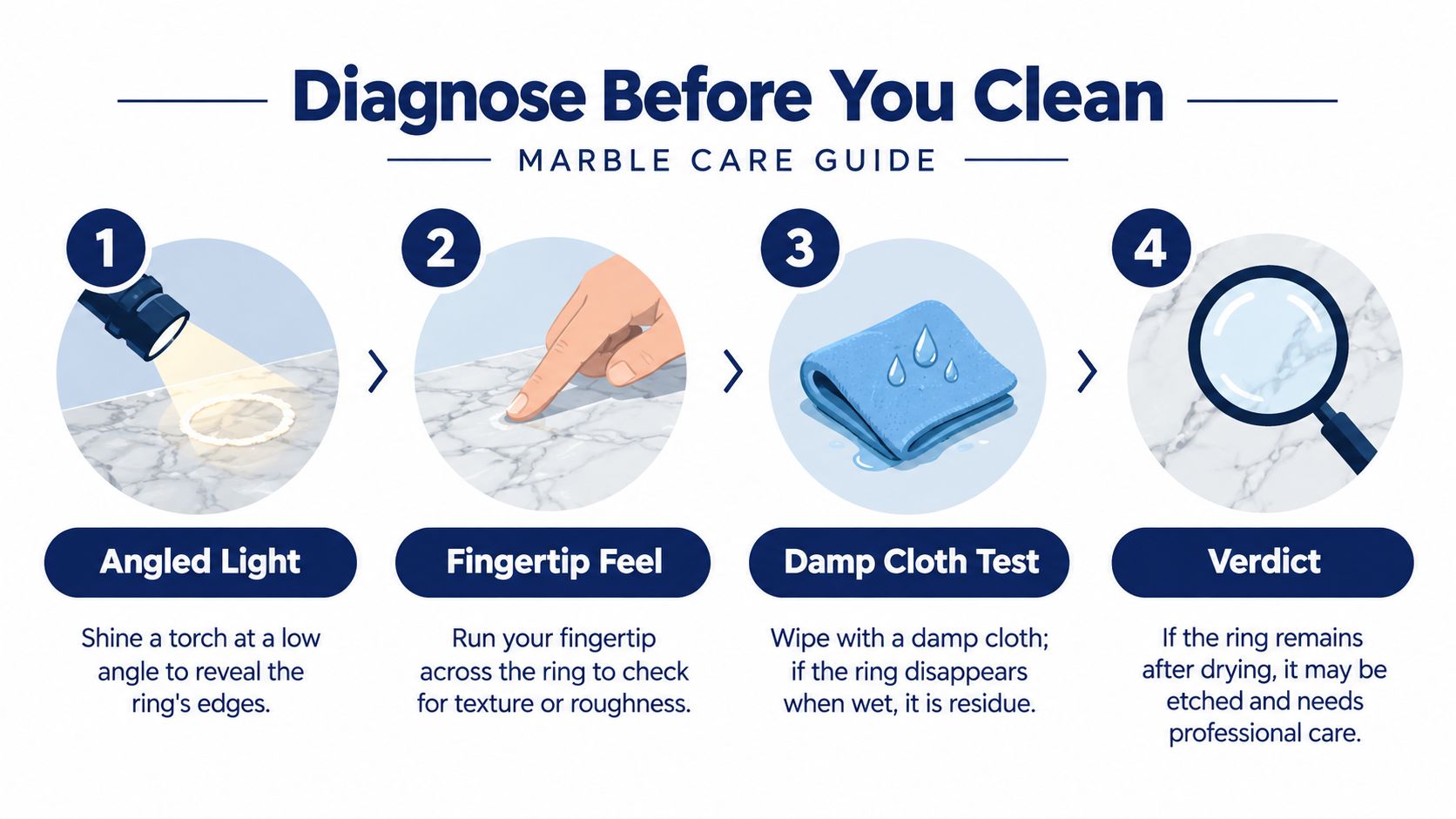
Three checks, then a decision
Look across the surface. Photograph the ring under side lighting, or shine a torch across it at a low angle. Angled light can reveal an edge or raised outline that's hard to see from directly above. A chalky rim or visible film points more towards residue; a smooth, uniformly dull patch suggests the polish may have changed.
Feel gently. Run a clean fingertip across the mark without scraping. A raised or slightly rough deposit can indicate minerals sitting on top. If the surface feels smooth but looks flatter or duller than the surrounding finish, don't assume more cleaning will help.
Try a damp microfiber cloth. Wipe the mark lightly, then let the area dry. If the ring disappears while wet and returns after drying, the change in appearance can help you assess it, but it isn't conclusive by itself. If the mark lifts with the cloth, you may have loose residue. If it remains dull after gentle cleaning, stop rather than increasing pressure or switching to an acidic product.
For broad context on how hard-water marks affect other stone surfaces, these cloudy granite countertop repair tips explain why surface type matters when choosing a treatment. Granite and marble don't respond identically, so don't transfer a remedy from one stone to another without checking that it's compatible.
If the mark persists, compare its appearance with the difference between honed and polished marble. A finish change can make a spot look lighter even when there's no removable material left.
Your decision path should stay conservative: wipe a clear surface deposit gently; use a pH-neutral stone cleaner if residue remains; stop and seek stone-care advice if the surface stays dull or optically different. Don't scratch the ring to see whether it comes off. That test can add damage without answering the question.
Safe Removal Methods for Mineral Residue
Only use a cleaning sequence once the ring looks like removable surface residue. Begin with the least aggressive method. Marble doesn't benefit from vigorous scrubbing, soaking, or chemical experimentation.
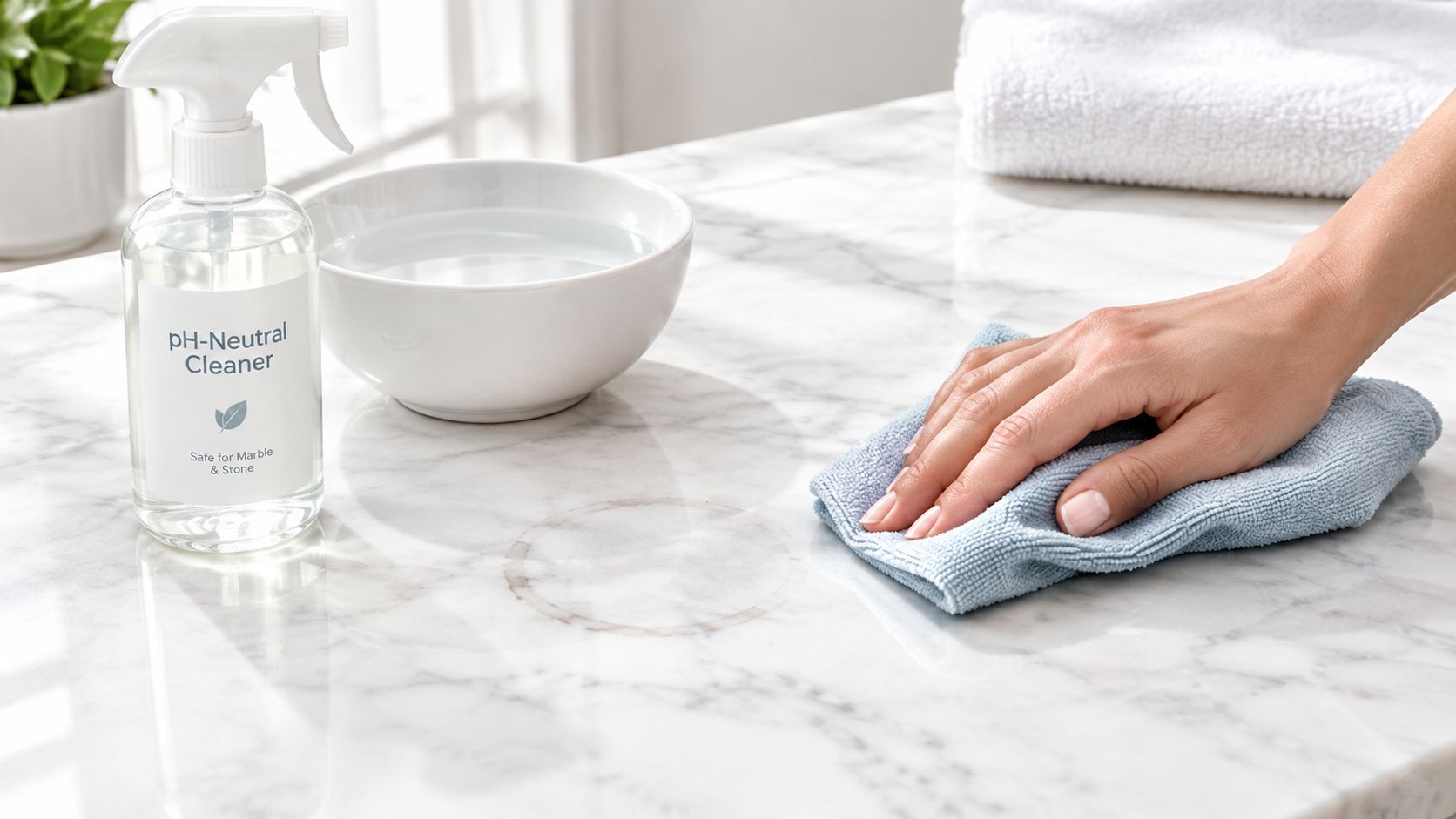
Work from dry wiping to a neutral cleaner
First, wipe the area with a clean, dry microfiber cloth. This removes loose dust and surface particles without adding moisture or abrasion. If the mark remains, dampen a separate microfiber cloth and wipe lightly.
For stubborn residue, choose a pH-neutral cleaner labelled for natural stone. Test it on an inconspicuous area before treating the visible ring. Apply the cleaner to the cloth, not directly to the slab, so liquid doesn't pool around the mark or enter seams.
Work a small area gently for approximately 30–60 seconds, then rinse promptly and buff the surface fully dry with a clean cloth. Don't let the product sit longer in the hope that extra dwell time will make it work better. Follow the cleaner's label if it gives a more specific method.
In places where mineral residue also builds up on sinks or fittings, these hard-water sink stain removal tips offer useful context for the surrounding fixtures. Keep the materials in mind, though. A method that suits a sink finish may not be safe for calcium-carbonate marble.
A short demonstration may help you recognise a controlled cleaning technique. Treat it as visual guidance, not permission to use an unverified chemical or abrasive on your own slab.
Keep acids and harsh abrasives out
Don't use vinegar, lemon juice, toilet cleaners, hydrochloric acid, or hard-water descalers on marble. Their acidic ingredients can attack the calcium-carbonate surface and enlarge a dull patch. Avoid scouring pads and gritty powders too. They can scratch the polish even when the cleaner itself isn't acidic.
If the mark doesn't lift with a neutral cleaner, don't repeat the process more aggressively. Persistent deposits around RO units, planters, bathroom fittings, or wet counters need a marble-safe mechanical treatment or professional refinishing, not an acid-based shortcut. In areas with recurring hard-water buildup, filtered, RO, or distilled rinse water can help limit fresh mineral residue.
Use a cloth reserved for stone care, and dry the surface instead of leaving it to air-dry. If cleaning removes the white deposit but leaves a dull-looking patch, stop. That's the point to assess the finish, not to reach for a stronger product.
When the Ring Is Actually Etching
A ring that remains after gentle cleaning may be etching, not a stubborn stain. Etching changes the surface finish when an acid reacts with marble's calcium carbonate. The resulting mark is often smooth to the touch, lighter or duller than the surrounding polish, and without a raised deposit to wipe away.
That's why repeated cleaning usually fails. A household cleaner can remove material sitting on the surface, but it can't restore polish that's been chemically altered. Scrubbing harder may introduce scratches, and another acidic product can make the affected area larger.
Residue vs Etching at a Glance
| Clue | Mineral Residue | Acid Etching |
|---|---|---|
| Cause | Dissolved minerals remain after water evaporates | Acid reacts with the marble surface |
| Appearance | May look chalky, cloudy, or ring-shaped | Often looks dull, lighter, or different from the surrounding polish |
| Feel | Can be raised or slightly rough | Usually smooth, without a deposit to lift |
| Gentle cleaning | May improve with a damp cloth or pH-neutral stone cleaner | Doesn't return the original finish |
| Next step | Rinse and dry; reassess if the mark persists | Stop cleaning and consult a stone professional |
If you're unsure, take a clear photo under side lighting and avoid further treatment until someone qualified can assess it. The comparison between polished marble countertops and other finishes can help you understand why a dull patch stands out, but it won't replace an on-site assessment when the surface is damaged.
Where home treatment should end
Stone professionals can assess whether a controlled honing or repolishing process is appropriate. Those are mechanical refinishing methods, not stronger versions of household cleaning. A small, isolated mark may need a different approach from a broad area where the polish has changed, so don't buy an abrasive pad or polishing powder and experiment across the countertop.
For a large affected area, a visible focal surface, or a mark near an edge or seam, contact a marble fabricator or restoration specialist. Early advice is sensible risk control. It's better to pause and ask than to widen the dull patch while trying one more cleaner.
Preventing Water Rings From Coming Back
Prevention works best when you address the water source, protect the surface appropriately, and change the habits that leave droplets sitting on the stone. In Indian homes, that may mean a borewell-fed tap, an RO unit standing on the kitchen counter, or a bathroom vanity beside a frequently used shower. Match the prevention to the spot where rings keep appearing.
Reduce exposure and dry promptly
If deposits repeatedly form around a particular fitting, consider whether filtered water is practical there. Filtration or RO can reduce exposure to minerals in the water used around the surface, though a filter doesn't replace wiping spills. Keep the RO unit's base dry, and place it on a tray if drips or condensation collect underneath.
Use coasters under glasses and planters, and put a small absorbent mat near fixtures that drip. After splashes, wipe the marble with a clean cloth rather than waiting for the water to evaporate. In bathrooms, dry the vanity after use and remove soap film with a stone-safe cleaner; residue can make the surface look dirty and encourage harsher cleaning later.
If you're choosing care products or looking for marble cleaning guidance, check that the recommendations suit natural marble. Don't assume a product is safe because it's marketed for kitchens, bathrooms, or general hard-water removal.
Choose protection for the surface and setting
A compatible penetrating sealer can reduce how readily liquid absorbs into marble, but it doesn't make the stone stain-proof or acid-proof. Ask a stone professional which sealer suits the marble and how it should be maintained. The right choice depends on the stone and how the surface is used, so don't rely on a one-size-fits-all timetable.
Think about the finish as well as the location. A countertop beside a sink faces frequent splashes; a bathroom vanity may be exposed to standing droplets; a low-use decorative surface has different demands. When you select marble or discuss fabrication and installation, ask how the finish will behave in that setting and what routine care it needs.
Sealing reduces absorption; it doesn't replace prompt drying or pH-neutral maintenance. Keep a microfiber cloth near high-splash areas, wipe water when you see it, and use suitable protection as one layer of care rather than a licence to leave moisture on the stone.
Quick Decision Checklist and When to Call a Professional
Keep this checklist near the cleaning supplies. It prevents the most common mistake: treating a change in the marble's polish as if it were a deposit that needs stronger chemicals.
- Start dry. Wipe the ring gently with a clean microfiber cloth.
- Inspect before escalating. Check the surface under angled light and feel it lightly without scraping.
- Use a neutral cleaner only if needed. Test a pH-neutral natural-stone cleaner in an inconspicuous spot, then rinse and dry the treated area.
- Stop at dullness. If the pale mark remains smooth and optically different, don't try vinegar, lemon, an acid descaler, or abrasive scrubbing.
- Document uncertainty. Take a photo under side lighting and ask a marble fabricator or restoration specialist to assess persistent marks.
- Escalate early for broad damage. A professional can assess whether diamond honing, repolishing, or resealing is appropriate for the affected surface.
High-use areas, including counters near sinks, bathroom vanities, and commercial serving surfaces, deserve a clear maintenance routine. Staff and household members should know which cloth and cleaner are safe for marble, and should dry spills rather than leave them to evaporate.
The rule is calm and firm: clean deposits gently, stop when the finish looks dull, and call a stone professional when the mark persists. You don't need to defeat every ring with a stronger product. You need to choose the treatment that matches the surface.
Varun Marbles helps homeowners and project teams select natural marble and other stone surfaces, with slab guidance, fabrication, and installation support. If you're choosing marble or need advice on a surface for your project, visit Varun Marbles and speak with the team about the right material and finish.