
मार्बल साफ करने का तरीका: Safe Home Methods

Haldi on the kitchen counter. A thin ghee line near the hob. Tea drops under the cup ring in the pooja room. That's usually how people end up looking for मार्बल साफ करने का तरीका and get two kinds of advice that don't help much. One is too vague. The other damages the stone.
Marble isn't hard to live with, but it does punish the wrong cleaner. The trick is simple once you understand it. Oil stains need one kind of poultice. Pigment and food stains need another. If you match the stain to the right chemistry and move quickly, most day-to-day messes can be handled without ruining the polish.
Table of Contents
- What Makes Marble a Special Surface to Care For
- Daily Cleaning Routine That Protects the Polish
- Choosing the Right Cleaner for Each Stain Type
- Step by Step Spill and Stain Removal
- Cleaning Agents and Habits You Must Avoid
- Periodic Sealing and Polishing for Long Term Shine
What Makes Marble a Special Surface to Care For
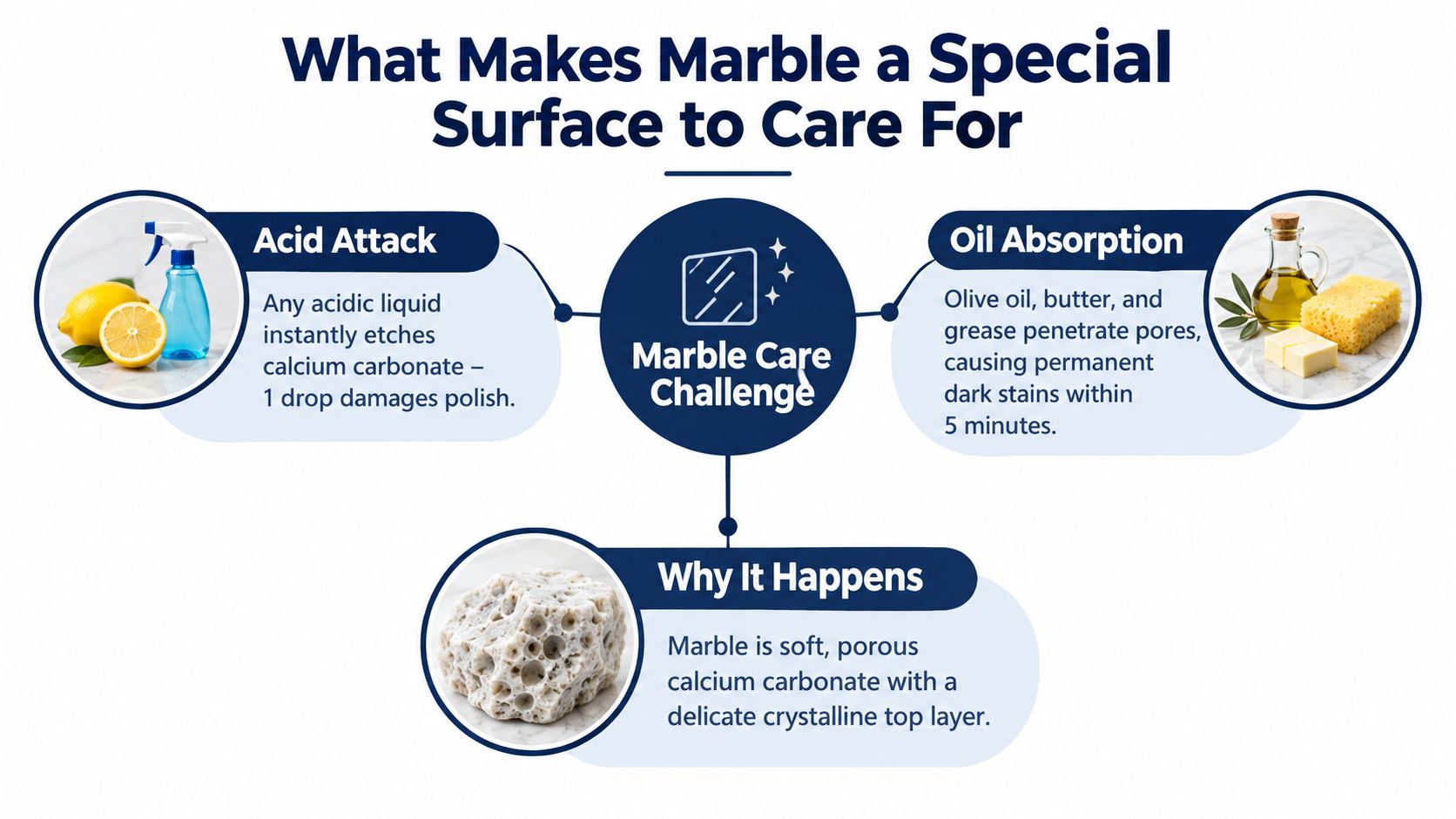
Marble looks calm, but it's a reactive surface. In Indian homes, the two problems that show up again and again are acid etching and oil absorption. One attacks the shine from the top. The other sinks below the surface and leaves a dark patch that feels impossible to clean.
Acid etching is the faster mistake. Lemon, vinegar, tamarind, tomato gravy, bathroom descalers, even some all-purpose sprays can leave a dull mark on polished marble. Wiping harder won't fix that because the polish itself has been disturbed.
Oil is slower but just as troublesome. Ghee from tadka, mustard oil from achar jars, sesame oil used during festive cooking, and soot-mixed oil from pooja lamps can settle into the stone's tiny pores. That's why a surface can look clean at night and show a deeper patch the next morning.
Why Indian and Italian marble don't behave exactly the same
Most marble used in homes is calcium-based stone with natural veining and a crystalline structure. That gives it beauty, but it also means it won't behave like porcelain or quartz. Some slabs are tighter and finer in feel. Others are more open and drink in spills faster.
In practical use, Italian marble often feels denser and takes a finer polish, while many Indian marbles are a bit more forgiving in daily wear but can stain faster if left unattended. That matters in kitchens, wash areas, and pooja spaces where exposure is frequent.
If you're still comparing countertop options before you commit, this guide to Chennai kitchen top materials gives a useful broader view of where marble fits and where another surface may make more sense. Finish also changes maintenance. A honed slab and a polished slab won't show marks the same way, which is why this note on honed and polished marble differences is worth reading before you decide how much shine you want.
Practical rule: Marble stays beautiful when you stop treating every stain as the same problem.
What actually works
A widely cited India-focused marble care guide says marble should be cleaned only with a pH-neutral product and never with acidic cleaners because acids can etch the surface and reduce polish. The same guide also recommends immediate spill clean-up and stain-specific poultices. For oily stains such as oil or ghee, it recommends a poultice made from baking soda or white flour plus acetone, spread about 1 cm thick, covered, and left for 24 to 48 hours so the powder can draw the oil out. For organic stains such as tea, coffee, wine, or turmeric, it recommends dilute hydrogen peroxide in the poultice instead (India marble polishing and care guide).
Daily Cleaning Routine That Protects the Polish
Daily cleaning is where most marble owners either preserve the finish or slowly wear it down. You don't need a complicated kit. You need the right sequence and a bit of discipline after cooking.
Start with these basics:
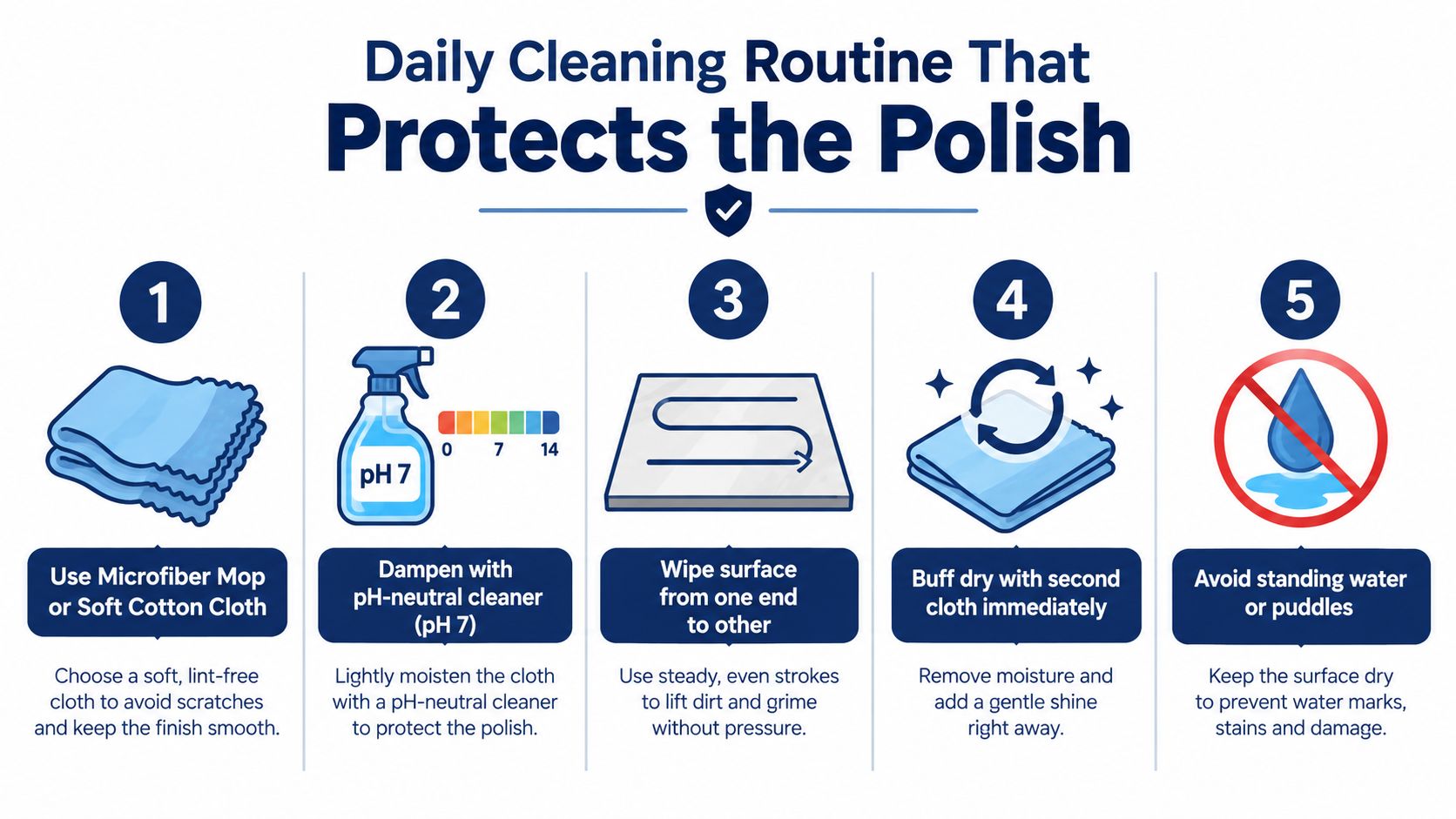
- Dust first: Use a microfiber mop or a soft cotton cloth to lift loose grit before any damp wiping.
- Keep a second cloth ready: This one is only for drying and buffing.
- Use lukewarm water: Not hot. You want the cloth damp, not steaming.
- Choose a pH-neutral cleaner: A stone-safe cleaner is the safest regular option.
The wipe-down that works after cooking
Once the loose dust is gone, dampen the cloth and wring it thoroughly. Marble doesn't like puddles, and it doesn't need a soaking mop. Wipe in overlapping passes instead of random circles. On slabs with strong veins, following the veining direction helps you keep the finish looking even.
Then dry it straight away with the second cloth. That last step is the one people skip, and it's the reason counters start looking cloudy. Water left to sit can leave a film, especially where there's fine kitchen grease in the air.
On polished marble, drying is part of cleaning. A wet wipe without a dry buff is only half the job.
For floors, sweep or dust-mop first and only then mop lightly. Never grind grit under the mop. Tiny particles act like sandpaper over time, especially near entry points and dining areas.
A pooja room needs a lighter hand. Most days, a soft dry duster is enough. Use a damp wipe only when there's visible oil, kumkum residue, flower moisture, or aarti spill. If the surface feels tacky the next morning, that's usually oil mist settling from cooking or lamp smoke. A pH-neutral cleaner on a barely damp cloth will lift that better than repeated dry rubbing.
Later in the day, this short visual is useful if someone else in the house helps with cleaning and needs to follow the same routine:
Daily habits that save the finish
- Lift, don't drag: Steel canisters, puja thalis, and mixer jars can scratch if dragged.
- Use trays under oil bottles: Prevention is easier than pulling oil back out of stone.
- Wipe by zone: Hob side first, sink side next, then dry everything together.
- Keep one marble-only cloth: Don't use the same rag that touched bathroom cleaner or phenyl.
Choosing the Right Cleaner for Each Stain Type
Good marble care becomes practical instead of generic. Don't throw the same paste at every mark. A tea stain, a ghee stain, and a rust ring don't respond to the same cleaner.
An India-specific marble maintenance article says pigment-heavy spills such as curry powder, leafy greens, and coffee grounds should be wiped immediately, and it recommends leaving a baking-soda poultice on stained areas for 24 hours before removal. It also advises repeating the process if needed and using hydrogen peroxide for some stains. A related marble-care manual reinforces that fresh stains are easier to remove when treated quickly with a soft cloth followed by an abundant water rinse (marble maintenance guidance for India).
Stain Type to Poultice Recipe Match
| Stain Type | Poultice Recipe | Dwell Time |
|---|---|---|
| Oil-based stains such as ghee, mustard oil, cooking grease | Baking soda or white flour mixed with acetone into a thick paste, then covered | 24 to 48 hours |
| Organic stains such as tea, coffee, turmeric | Baking soda or absorbent powder with dilute hydrogen peroxide into a paste, then covered | Leave until it has worked through the stain, then remove and check |
| Ink or dye | Start with the gentlest stone-safe approach first. If the mark remains, test carefully in an inconspicuous area or call a professional | Varies |
| Rust or metal marks | Use a marble-safe rust remover or a professional treatment. Avoid household acids | Varies |
Why the match matters
Oil needs a solvent-supported poultice because you're trying to draw grease out of the stone's pores. Water-based cleaning alone won't do much once oil has sunk in.
Tea, coffee, haldi, and similar food pigments are different. They respond better to oxidising action, which is why hydrogen peroxide is paired with the poultice for organic staining in the verified guidance.
If you pick the wrong poultice, you don't just waste time. You often push the stain deeper by reweting it without actually lifting it.
For everyday home use, keep the logic simple. Greasy stain equals acetone-based poultice. Food colour or beverage stain equals hydrogen-peroxide poultice. That one distinction solves most kitchen and pooja-room trouble.
Step by Step Spill and Stain Removal
Fast response matters more than heroic scrubbing later. The first few minutes decide whether you're dealing with a quick clean-up or a set-in stain.
What to do at 0, 5, 30, and 60 minutes
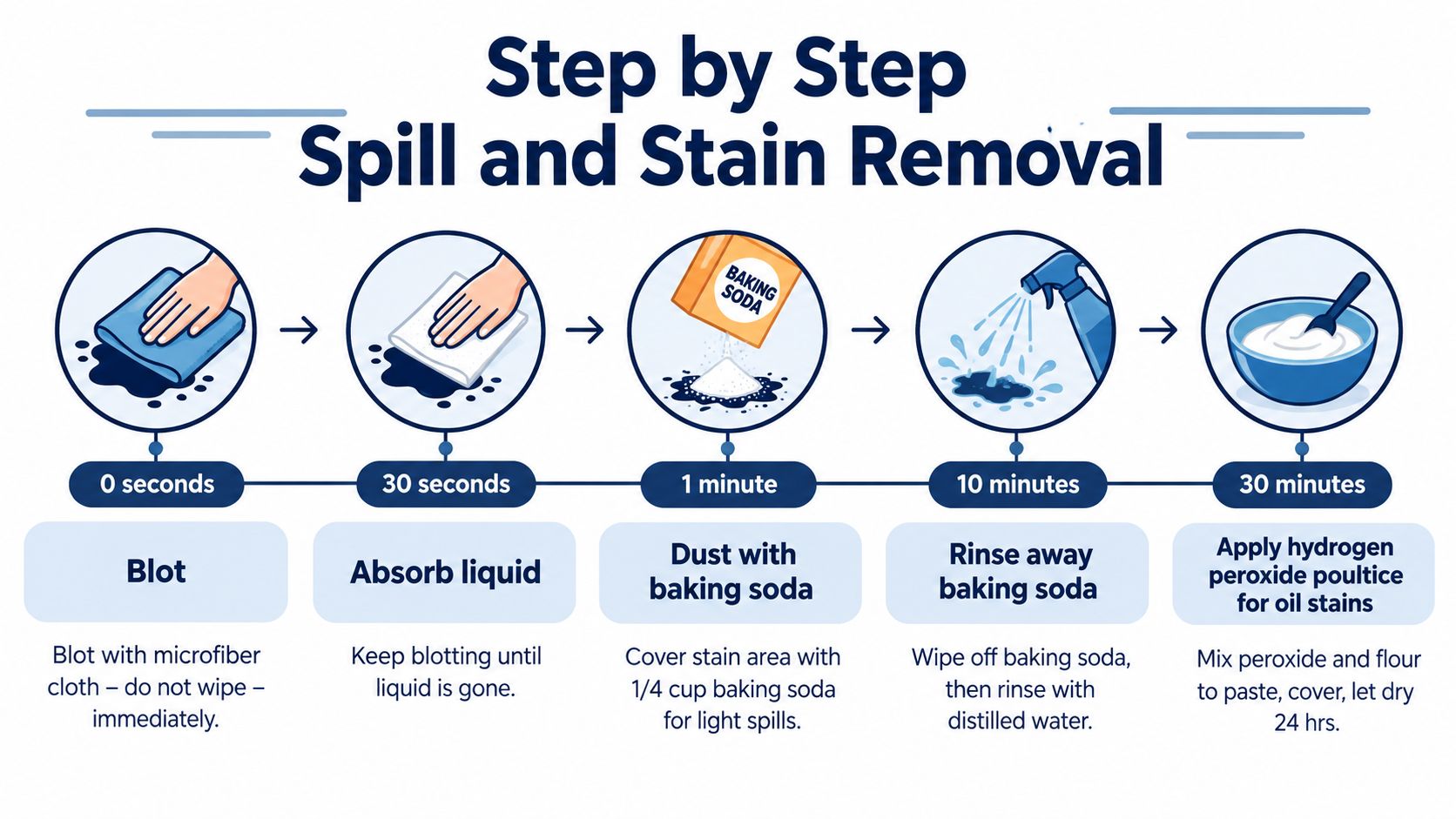
At 0 minutes, blot the spill. Don't wipe it across the slab. Press a clean microfiber cloth or soft cotton cloth over the spot and lift. Work from the outside inward so you don't spread tea, oil, or haldi further.
At 5 minutes, rinse the area lightly with plain lukewarm water and blot dry. The goal here is dilution, not soaking. If a faint mark remains, identify the stain type before you mix anything.
Applying the poultice properly
At 30 minutes, apply the matched poultice. For oily spots, use the acetone-based mix described earlier. For tea, coffee, or turmeric, use the hydrogen peroxide version. Spread the paste thickly enough to cover the mark fully, then cover it with plastic wrap so it stays in contact with the stain while working.
At 60 minutes and beyond, leave it alone. People often ruin the process by lifting the cover too early “to check”. Let the poultice do the pulling. Once done, remove the cover, allow the paste to dry out, then lift it gently with a plastic spatula or scraper that won't scratch the polish.
Final clean-up after the poultice
Use this finishing sequence:
- Lift off residue carefully: No metal scraper.
- Rinse with a pH-neutral cleaner: Just enough to clear the remaining film.
- Buff dry at once: A soft cloth is enough.
- Check in angled light: Some stains are gone but still look visible until the surface is fully dry.
If the mark is from mineral-heavy water and not food or oil, the treatment path is different. This note on hard water stains on marble helps separate those cloudy marks from true staining.
Don't scrub marble like a steel sink. Blot, match the stain, cover the poultice, and give it time.
Cleaning Agents and Habits You Must Avoid
The fastest way to spoil marble is with “strong” cleaners that sound effective because they fizz, bleach, or cut through grime instantly. Marble doesn't reward that approach.
Agents That Damage Marble vs Safer Alternatives
| Harmful Agent | What It Does | Safe Alternative |
|---|---|---|
| Vinegar | Can etch the surface and reduce polish | pH-neutral stone cleaner |
| Lemon juice | Acid can dull polished marble | Damp microfiber cloth with stone-safe cleaner |
| Harpic and acidic toilet cleaners | Can damage bathroom marble quickly | Marble-safe bathroom cleaner |
| Bleach for routine cleaning | Can alter appearance over time and isn't ideal for regular marble care | Gentle pH-neutral cleaner |
| Generic all-purpose spray | May contain ingredients that aren't stone-safe | Cleaner labelled safe for natural stone |
| Stiff brush or abrasive scrubber | Can scratch the finish | Soft microfiber mop or cotton cloth |
| Wet cloth left sitting on the surface | Encourages marks and patchiness | Wipe, then dry immediately |
Habits that cause slow damage
Abrasive cleaning is one problem. Casual household hacks are another. Tamarind water, lemon for shine, vinegar for bathroom build-up, and concentrated phenyl all show up in real homes. They also show up in real repair jobs.
Steam mops aren't a good idea on polished marble either. Heat and moisture together are more than the surface needs. So is over-mopping. Clean lightly, dry fully, and stop trying to make marble behave like ceramic tile.
For tougher maintenance needs, some homeowners use guidance from their slab supplier or fabricator. If you bought stone through a source that also advises on aftercare, follow their stone-specific cleaner recommendations rather than defaulting to supermarket chemicals.
Periodic Sealing and Polishing for Long Term Shine
Daily care keeps marble presentable. Periodic care keeps it from looking tired. Kitchen counters, corridor flooring, and pooja-room platforms all age differently, so don't expect one maintenance rhythm to suit every surface.
How to judge whether resealing is due
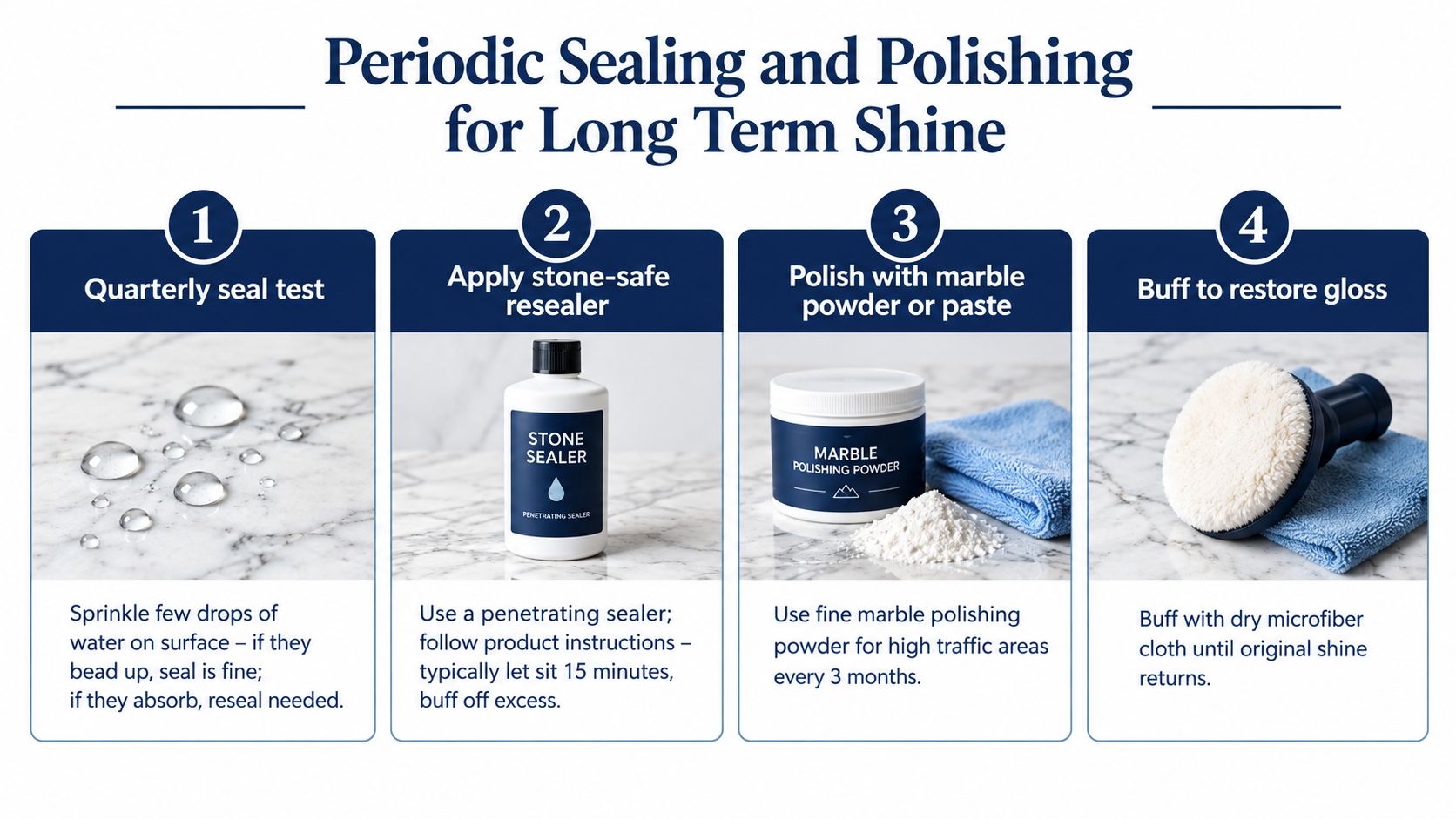
A simple water-drop check gives you a practical answer. Sprinkle a few drops on the clean surface and watch how the stone behaves. If the water sits on top, the sealer is still helping. If the stone darkens where the drops sit, it may be time to reseal.
Before any sealing, deep clean the area with a pH-neutral product and allow it to dry thoroughly. Sealer over trapped moisture is a bad bargain. It can leave haze or patchiness instead of protection.
Sensible long-term upkeep
Use a penetrating sealer made for marble and apply it in thin, even coats. Work in small sections so you can control the finish and wipe away excess before it dries on top. The aim is protection within the stone, not a sticky layer sitting above it.
Polishing is a separate job. If the shine has faded, use a marble-specific polishing product or call a stone professional for larger areas. Avoid waxes and shortcut gloss products meant for cars or furniture. They build up, trap grime, and rarely age well on natural stone.
A polished worktop that sees daily cooking will need more attention than a guest-room floor. A pooja slab may need little more than careful cleaning and occasional review, especially if oil lamps and kumkum are used regularly.
If you want to understand how polished kitchen surfaces behave over time before deciding on maintenance, this guide to polished marble countertops is a useful companion. And if you're sourcing new stone or replacing a problem slab, Varun Marbles is one supplier that works with both Indian and Italian marble along with other surface materials, which can help when maintenance expectations need to be matched to the right stone from the start.
A sealer helps buy time. It doesn't give you permission to ignore spills.
If you're choosing marble for a kitchen, pooja room, vanity, or full flooring layout, Varun Marbles can help you match the look you want with the level of upkeep you're willing to handle. For stone selection, finish guidance, and practical support on Indian and Italian marble surfaces, visit Varun Marbles.