
Beige Marble Texture Guide for Warm Modern Interiors

You've chosen a warm beige floor for a sunlit living room, saved several showroom images, and asked for “the same marble texture” across the floor, island and television wall. The first surprise often comes at the stone yard. One slab looks creamy and quiet, another carries taupe movement, and a third has broad veins that appear almost dramatic under showroom lighting.
That difference is the central idea behind beige marble texture. Beige isn't a single standardised material. It's a visual family shaped by the stone's origin, quarry block, slab selection, finish, lighting and installation layout. Once you understand those variables, you can choose a surface that delivers the mood you want without confusing a colour reference with a guaranteed supply specification.
Table of Contents
- Introduction to Beige Marble Texture and Its Quiet Appeal
- What Makes Beige Marble Texture Distinct
- Popular Beige Marble Varieties and Their Visual Signatures
- How Light Finish and Scale Shape the Texture
- Where Beige Marble Texture Works Best in Interiors
- Pairing Beige Marble Texture With Colours and Materials
- Choosing and Caring for Your Beige Marble Look
Introduction to Beige Marble Texture and Its Quiet Appeal
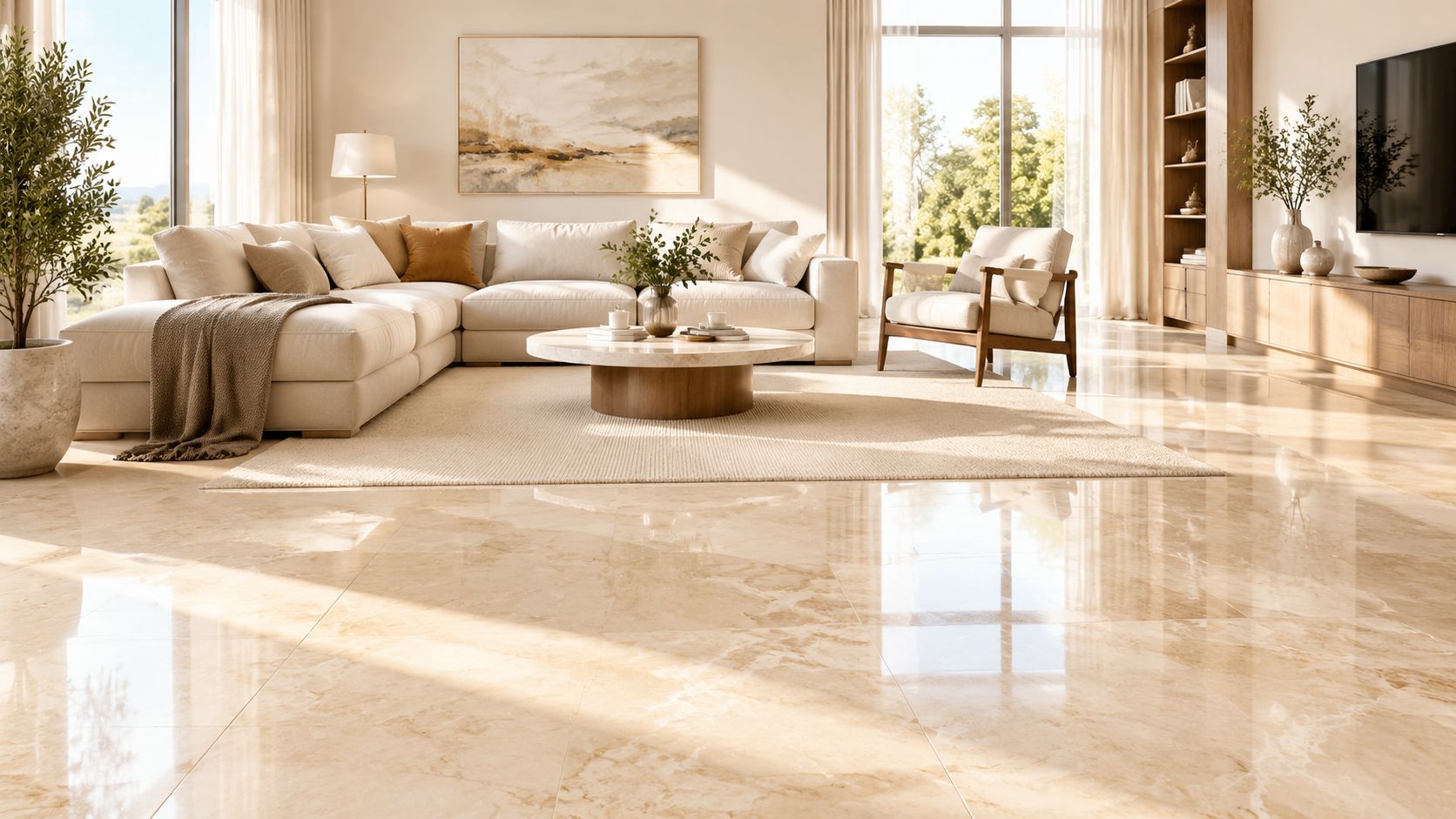
A well-chosen beige marble floor rarely demands attention in the way black stone or heavily veined white marble does. Instead, it gives the room a warm foundation. Sunlight moves across a field of cream, sand and soft taupe, while delicate veins add enough movement to prevent the surface from looking flat. A cream sofa, timber console and brushed metal light can sit comfortably above it because the stone creates continuity rather than visual competition.
That quiet quality explains why designers use beige marble in both contemporary and classic interiors. Stark white marble can feel crisp and high contrast, while dark marble introduces weight and drama. Beige sits between those extremes. It can make a room feel collected and substantial without turning the floor into the main event.
The phrase “beige marble texture” describes more than colour. It includes the way the base tone shifts across a slab, whether the veins are hairline or broad, how closely the grain is packed, and how the surface responds to light after polishing or honing. Two stones may both be described as beige, yet one can feel soft and uniform while the other reads as expressive and architectural.
India's supply makes that distinction especially important. Rajasthan has long been the main centre of Indian marble production, accounting for about 89% of production value in 2014–15, while Gujarat contributed about 10%, according to the India marble market overview. That concentration supports a broad range of Indian light-toned and cream-beige materials, but it doesn't mean every beige slab will share the same tone or pattern.
The useful mindset is simple. Treat beige marble as a material with a visual signature, not as a paint colour. You're selecting a particular balance of warmth, movement and consistency, then deciding whether natural variation supports the project or creates unnecessary coordination risk.
What Makes Beige Marble Texture Distinct
A slab becomes easier to specify when you break its appearance into four parts. Think of the base tone as a watercolour wash, the veins as drawn lines, the grain as the weave of linen, and the finish as the way light falls on the fabric.
Start with the base tone
The base may lean towards ivory, pale cream, sand, biscuit or taupe. Warm beige contains yellow, honey or pink undertones, while a quieter neutral beige may sit closer to stone grey. Hold a sample beside the wall paint, cabinet finish and daylight entering the room. A slab that looks neutral in a cool showroom can appear warmer beside cream upholstery or timber.
Read the veins as movement
Veins can be fine, broken, cloudy, linear or broad and flowing. Katni beige, for example, is described as a warm beige-to-cream stone with darker flowing veins, and regional guidance on Indian marble types connects this character with decorative flooring and bedroom interiors. A broad, continuous vein often creates a more luxurious impression across a large wall, while a tighter pattern can keep a wide floor visually calm.
Notice grain density
Some beige stones present a compact field with subtle speckling. Others show visible mineral movement or tonal clouds. Fine, closely packed grain can make a surface feel smooth and composed, whereas more open variation gives the slab a stronger natural identity. Neither is automatically better. The right choice depends on whether you want the stone to disappear into the architecture or act as a feature.
Understand the finish
Indian beige marble is typically a calcite-dominant metamorphic stone with density in the range of 2,500 to 2,700 kg/m³ and water absorption around 0.5% to 1%, as outlined in this marble material reference. Its compact surface can take a refined polish, but calcite remains sensitive to acids. Lemon juice, vinegar and acidic cleaning products can etch the surface, even when the stone looks dense.
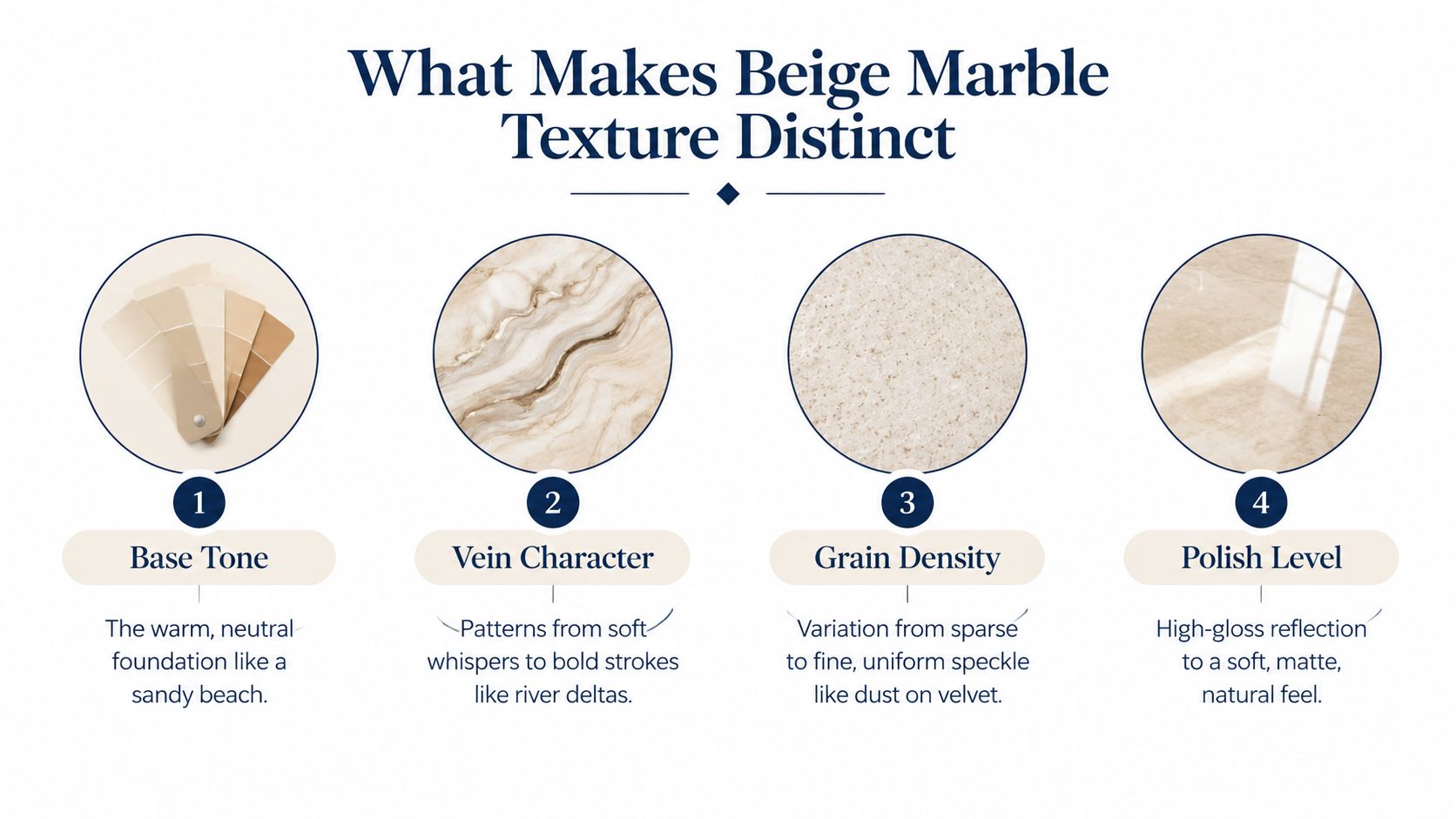
A polished finish reflects light and makes colour variation and veining appear sharper. It suits spaces where you want brightness and a formal, reflective character. A honed finish has a softer matte quality. It reduces glare, feels more understated and can make minor surface marks less visually obvious, though it still needs sealing and sensible cleaning.
Practical rule: Never approve a beige marble texture from a small photograph alone. Inspect the actual slab, its edges and its surface finish under more than one lighting condition.
Popular Beige Marble Varieties and Their Visual Signatures
The beige family becomes less confusing when you compare stones by visual behaviour rather than by name alone. Trade names can vary between suppliers and markets, so ask to see the actual slab and confirm whether the material is natural, imported or engineered.
Katni beige is a useful Indian reference point. It generally presents a warm beige-to-cream field with darker, flowing veins. The pattern can create a decorative floor or a more expressive bedroom wall, especially when the selected slabs share a compatible direction of movement.
A more uniform sandy beige works differently. It gives expansive interiors a calmer envelope, with less interruption from contrasting lines. That can be useful in North Indian and NCR homes where the floor area is large and the design includes timber, fabric, artwork or decorative lighting.
Imported materials such as daino beige also appear in India's premium stone mix. Indian customs and import records show recurring trade in beige-toned rough marble blocks, including daino beige, through ports such as Mundra. This indicates that imported beige is part of the finishing market, but it doesn't turn the term into a single universal specification.
| Variety Look | Base Tone | Veining Character | Ideal Mood |
|---|---|---|---|
| Katni beige | Warm beige to cream | Darker, flowing movement | Decorative, welcoming and traditionally Indian |
| Uniform sandy beige | Sand, biscuit or light cream | Restrained or dispersed | Calm, minimal and visually continuous |
| Linear beige marble | Cream or soft taupe | Directional, fine lines | Tailored, contemporary and architectural |
| Daino beige style | Warm imported beige | Varied, often selected for slab expression | Curated, premium and feature-led |
The breadth of the vein matters more as the installation grows. On a small tile, a broad pattern may be cut into fragments. On a full slab wall, the same movement can become the room's visual focus. Bookmatching can amplify that effect by mirroring adjacent slabs, but only when the block and cutting sequence support a coherent pattern.
Be careful with the word “luxury”. A heavily veined slab isn't automatically more luxurious than a quiet one. In a compact apartment, a consistent beige field may produce a more elegant result because it reduces visual interruption. In a lobby or feature wall, controlled movement may provide the architectural identity the space needs.
For a useful contrast in warm brown stone, compare the visual character discussed in this guide to light Emperador marble. The aim isn't to choose by label. It's to identify the exact balance of tone and movement that your furniture, lighting and installation scale can support.
How Light Finish and Scale Shape the Texture
The same beige slab can look gentle in one room and highly graphic in another. Light, surface finish and panel scale change the perceived texture, even though the stone itself hasn't changed.
In direct daylight, polished marble can show a crisp reflection and stronger contrast between the base and its veins. Warm artificial light tends to deepen cream and honey notes, sometimes making a beige surface look more golden. Honing removes much of the reflection and gives the stone a velvety, quieter presence.
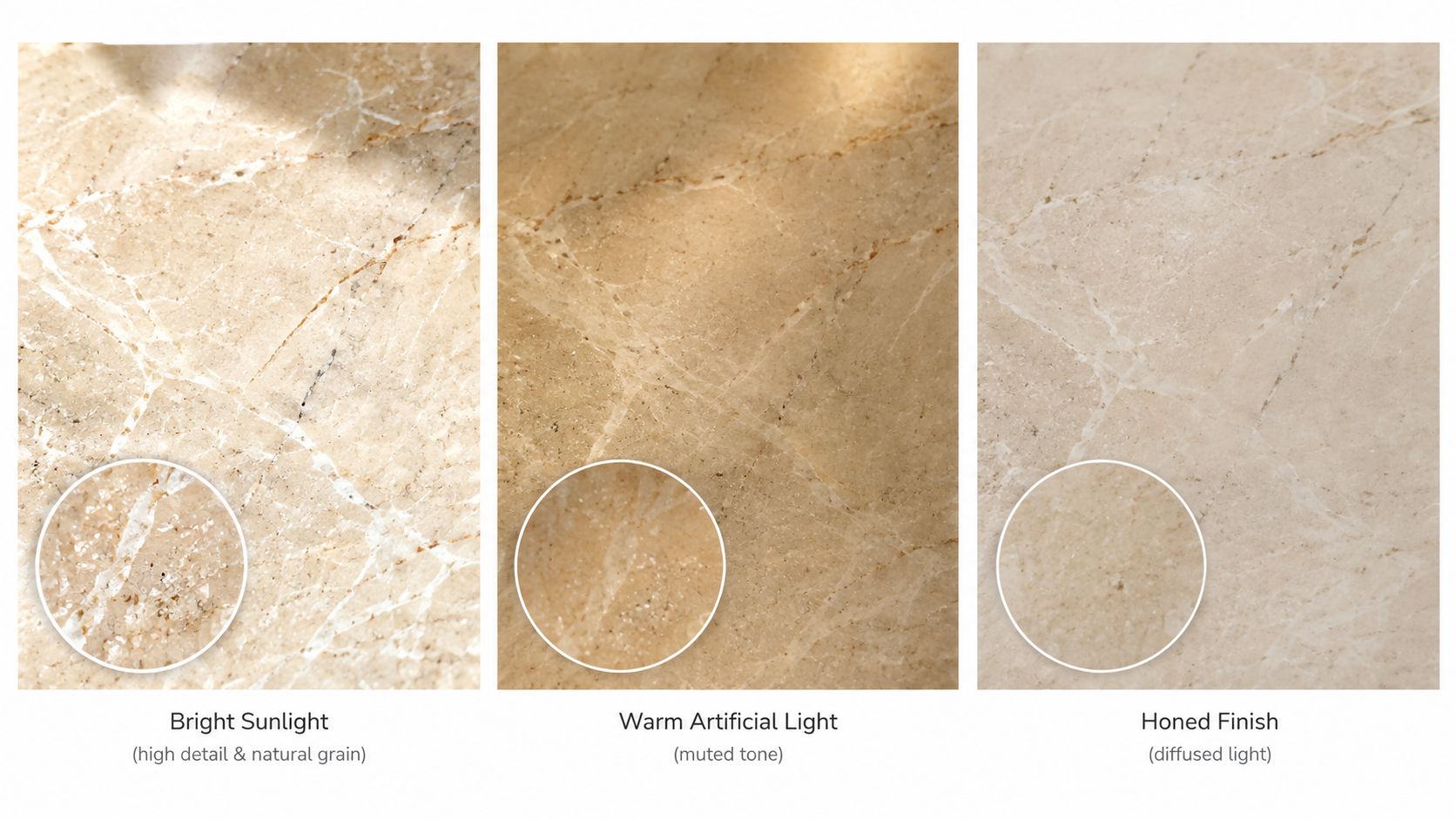
Match the finish to the visual job
A polished surface can help a room feel brighter because it reflects available light. It also makes the slab's natural variation more visible, which is useful when the veining is the main design feature. A honed surface absorbs more visual energy and works well when you want warmth without glare.
The choice isn't purely aesthetic. Acid-sensitive marble needs careful spill control in either finish. Polished stone may show etching or scratches more clearly because the reflective surface reveals changes in sheen. Honed stone can disguise some minor marks, but its pores and surface still require protection.
For countertops, review the practical considerations in this guide to polished marble countertops, then compare the stone's appearance with your actual use pattern. A powder room vanity and a heavily used kitchen island don't place the same demands on a surface.
Judge the slab at installation scale
Small samples hide the relationship between veins. A large slab reveals whether the pattern repeats, breaks abruptly or shifts in tone from one edge to another. Large-format panels can make a beige field feel continuous, while smaller tiles divide the pattern into regular units and create more grout lines.
View the slab vertically, under the kind of daylight and artificial light the room will receive. A horizontal sample on a showroom counter won't tell you how a full-height wall will read.
Bookmatching introduces another decision. Mirrored slabs can create a central feature around a fireplace, bed wall or lobby desk, but the visual success depends on vein continuity. If the project needs quiet consistency rather than a dramatic centre line, select slabs from a compatible lot and use a layout that avoids forcing a mirror effect.
For a showroom visit, bring cabinet, paint and upholstery samples. Ask the fabricator to mark the proposed cut lines on the slab, including sink openings, door panels and visible edges. That exercise often reveals whether the most attractive part of the stone will remain visible after fabrication.
Where Beige Marble Texture Works Best in Interiors
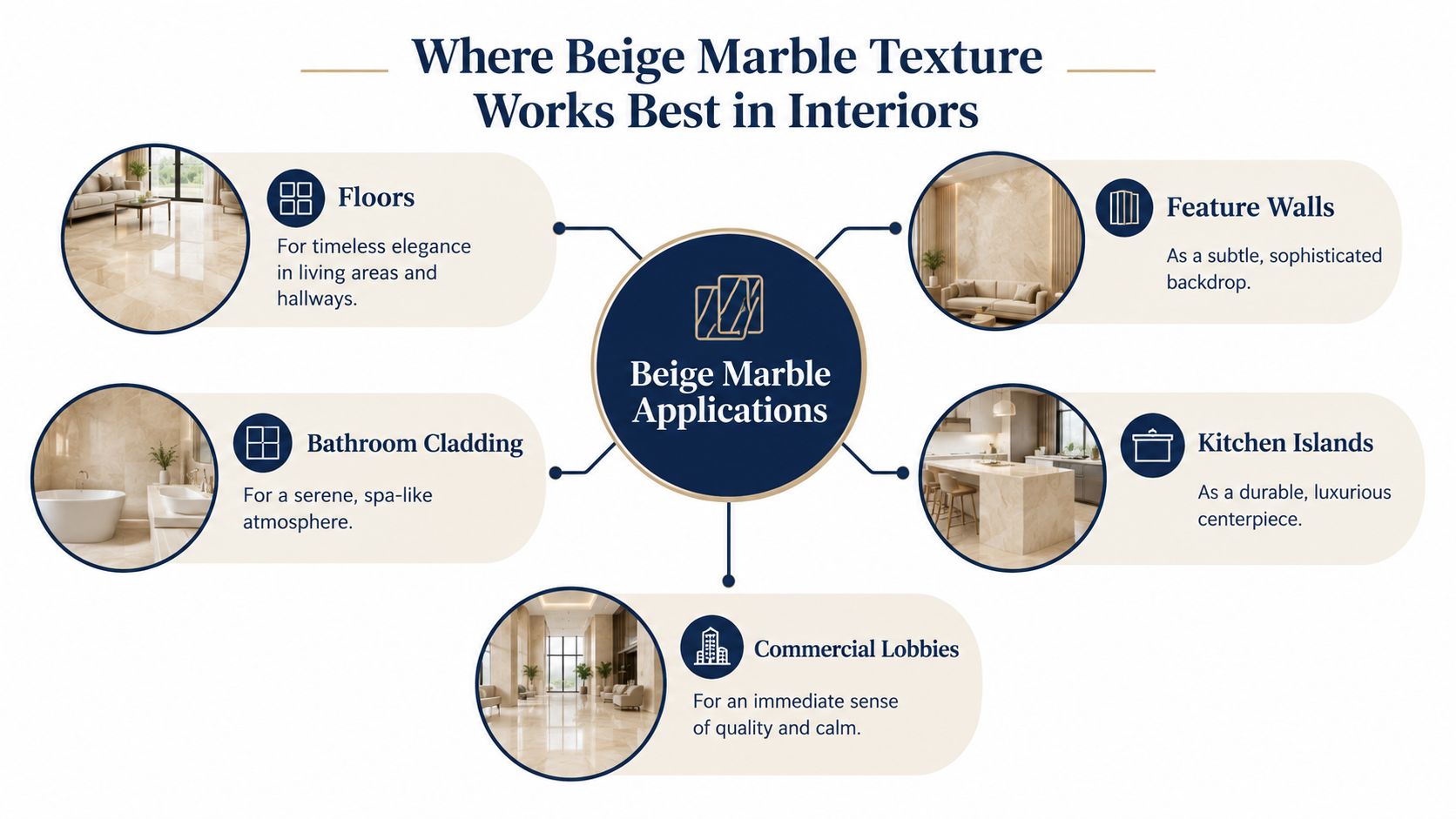
Beige marble can support many interior applications, but the same stone doesn't carry the same risk everywhere. A wall panel is protected from footfall and spills. A kitchen island faces cutting, staining, cleaning and repeated contact. The specification should follow the use, not just the image reference.
Floors
Beige marble flooring creates a continuous base for living rooms, corridors and bedrooms. A fine, fairly uniform texture can make the floor feel spacious, while flowing veins add direction and character. Choose the finish with slip, glare and maintenance in mind, particularly around entrances and areas where wet footwear is common.
Feature walls
A large slab can turn a beige field into a quiet architectural backdrop. Television walls, fireplace surrounds, headboards and reception desks benefit from deliberate vein placement. Mark the centreline, electrical points and join locations before cutting so the strongest movement doesn't disappear behind hardware.
Bathrooms
Beige marble cladding can create a calm, spa-like atmosphere across walls, niches and vanity fronts. Wet areas still need disciplined cleaning and sealing because water, mineral deposits and acidic products can affect the surface. A honed finish may provide a softer visual effect, while a polished wall can increase reflection in a compact bathroom.
Kitchen islands
The island is where appearance and performance meet most sharply. Natural marble can deliver an exceptional visual centrepiece, but calcite's acid sensitivity makes spill control essential. If the household wants a pale beige veined look with lower routine maintenance, engineered quartz or another composite surface may be a more suitable route.
Commercial lobbies
Hotels, offices and retail spaces often use beige stone to communicate calm quality without the visual severity of high-contrast materials. Specify the expected traffic, cleaning routine, edge detail and replacement plan before approval. A beautiful slab that cannot be sourced consistently later may create operational difficulty across a large fit-out.
India's supply base adds another layer to expansive NCR projects. Rajasthan produced 13,199,265 tonnes of marble in 2017–18, 8,252,000 tonnes in 2018–19, 10,621,000 tonnes in 2019–20 and 16,159,347 tonnes in 2020–21, while Gujarat's recorded production was 829,711 tonnes in 2017–18 and 1,086,979 tonnes in 2018–19, according to the Indian marble market production overview. Those figures show the historical strength of Rajasthan's quarry ecosystem, but availability for a specific beige texture still depends on block selection and lot control.
Use cut-to-size drawings, confirm edge profiles and reserve matching slabs before fabrication. Designers looking beyond India can also review tiling ideas for Dublin homes for broader pattern and layout inspiration, then adapt those ideas to local stone performance and supply conditions.
Pairing Beige Marble Texture With Colours and Materials
Beige marble looks effortless only when its undertones have somewhere to go. Pair a yellow-beige slab with a blue-white paint and the floor may look warmer than intended. Pair a grey-beige slab with heavily honeyed timber and the room can lose its sense of balance.
Start by identifying the stone's dominant undertone under the room's actual light. Then build the palette around three levels of contrast: a close tonal layer, a grounding material and one controlled accent.
Warm and tactile combinations
Warm beige marble works naturally with oak, walnut, cane, linen and wool. Timber adds grain, while textiles prevent the hard surface from making the room feel overly formal. Brushed brass can echo golden notes in the stone, especially when used on small details such as handles, lamps or tapware.
Keep the wood sample beside the slab rather than relying on a colour name. “Walnut” and “oak” can vary widely, just as beige marble can vary between cream, sand and taupe.
Cooler and sharper combinations
A beige stone with grey veining can sit comfortably beside soft grey cabinetry, putty paint and brushed nickel. Matte black introduces stronger contrast and gives the warm floor a contemporary outline. Use it selectively on frames, lighting or furniture legs so the room doesn't become visually divided into isolated dark accents.
For a minimal scheme, choose grout close to the stone's base tone. Matching grout allows the marble pattern to remain dominant, while contrast grout emphasises joints and can make a tiled layout feel busier. Always test the grout beside the actual finish, because polish and honing alter how the colour is perceived.
Three palette directions
- Modern warm: Cream-beige marble, natural timber, off-white upholstery and brushed brass.
- Quiet minimal: Neutral beige marble, soft grey cabinetry, textured ivory fabrics and muted metal.
- Graphic contemporary: Beige marble, matte black details, restrained artwork and a small amount of deep olive or rust.
Granite, onyx and quartz can also complement beige marble when each material has a clear role. Use granite where higher traffic or worktop demands call for a tougher visual anchor. Reserve onyx for a feature that benefits from its distinctive variation or translucency. Choose quartz when consistent tone and lower maintenance matter more than natural variation.
A strongly coloured stone can still work, but it needs editing. The cooler contrast found in blue and white marble shows why a beige room benefits from one intentional focal material rather than a collection of competing patterns.
Choosing and Caring for Your Beige Marble Look
The most useful question isn't “Is beige marble timeless?” It's “Does this project need natural variation or engineered consistency?” Natural marble offers a geological pattern that can make every slab feel individual. Engineered quartz can reproduce a beige veined appearance with a more controlled visual field and a non-porous surface, which may suit busy kitchens, bathrooms and hospitality settings better.
Choose natural marble when the stone's variation is part of the design brief. Choose an engineered alternative when matching tone across multiple surfaces, reducing staining risk and simplifying routine upkeep carry more weight. The decision should happen before the mood board becomes a fabrication order.
A practical selection sequence
- Inspect full slabs. Check the base tone, vein direction, patches, edges and any visible variation.
- Approve the layout. Mark bookmatching, joins, cut-outs, mitres and exposed edges before fabrication.
- Confirm the finish. Compare polished and honed samples under daylight and warm artificial light.
- Plan protection. Seal natural marble as recommended for the selected stone and use products intended for acid-sensitive surfaces.
- Control spills quickly. Avoid lemon, vinegar and harsh acidic cleaners on marble, particularly around kitchen and bathroom work zones.
- Allow for hard water. Mineral deposits can alter the appearance of pale surfaces, so cleaning routines and drying habits matter in wet areas.
Supply planning deserves equal attention. India's HSN 2515 marble imports recorded 16,973 shipments from June 2024 to May 2025, down 10% year over year, while May 2025 imports were down 31.6% from May 2024, according to marble import data for India. The same source shows beige rough blocks arriving from Turkey, reinforcing that “beige” describes a supply-specific visual category rather than one standard product.
Varun Marbles supplies natural Indian and Italian marble, granite, onyx and engineered quartz, with slab selection, cut-to-size fabrication, edge profiling and installation coordination. Its Gurugram showrooms at Sikanderpur Marble Market and HUDA Marble Market Sector 33–34 allow homeowners and design teams to compare actual slabs, finishes and alternatives before committing to a beige marble look.
Visit Varun Marbles in Gurugram to compare beige natural stone and engineered quartz slabs in person, assess veining and tone under showroom light, and discuss fabrication details with the material team. Bring your cabinet, paint and textile samples so your final beige marble texture works as a complete interior rather than an isolated colour choice.