
Belgian Black Marble: A Practical Guide for Buyers

Belgian Black is technically a fine-grained black limestone from Belgium, not a true metamorphic marble. The name describes a commercial stone family, and the specific quarry bed matters more than the word “marble” on the quotation.
You're probably comparing a dramatic imported slab with Indian black stones, trying to decide whether the extra sourcing effort is justified. The slab looks almost ink-black under showroom lights, while a sawn edge or unpolished sample appears blue-grey. That difference isn't a defect. It's a warning that you need to understand the material before approving a finish, application, or full cutting schedule.
Table of Contents
- What Belgian Black Marble Actually Is
- How the Stone Got Its Look
- Where Belgian Black Performs Best in a Project
- Finishes and Colour Palettes That Make It Sing
- Sourcing, Quarry Varieties, and How to Verify Quality
- Care, Sealing, and Long-Term Performance
What Belgian Black Marble Actually Is
Start with the geological specification
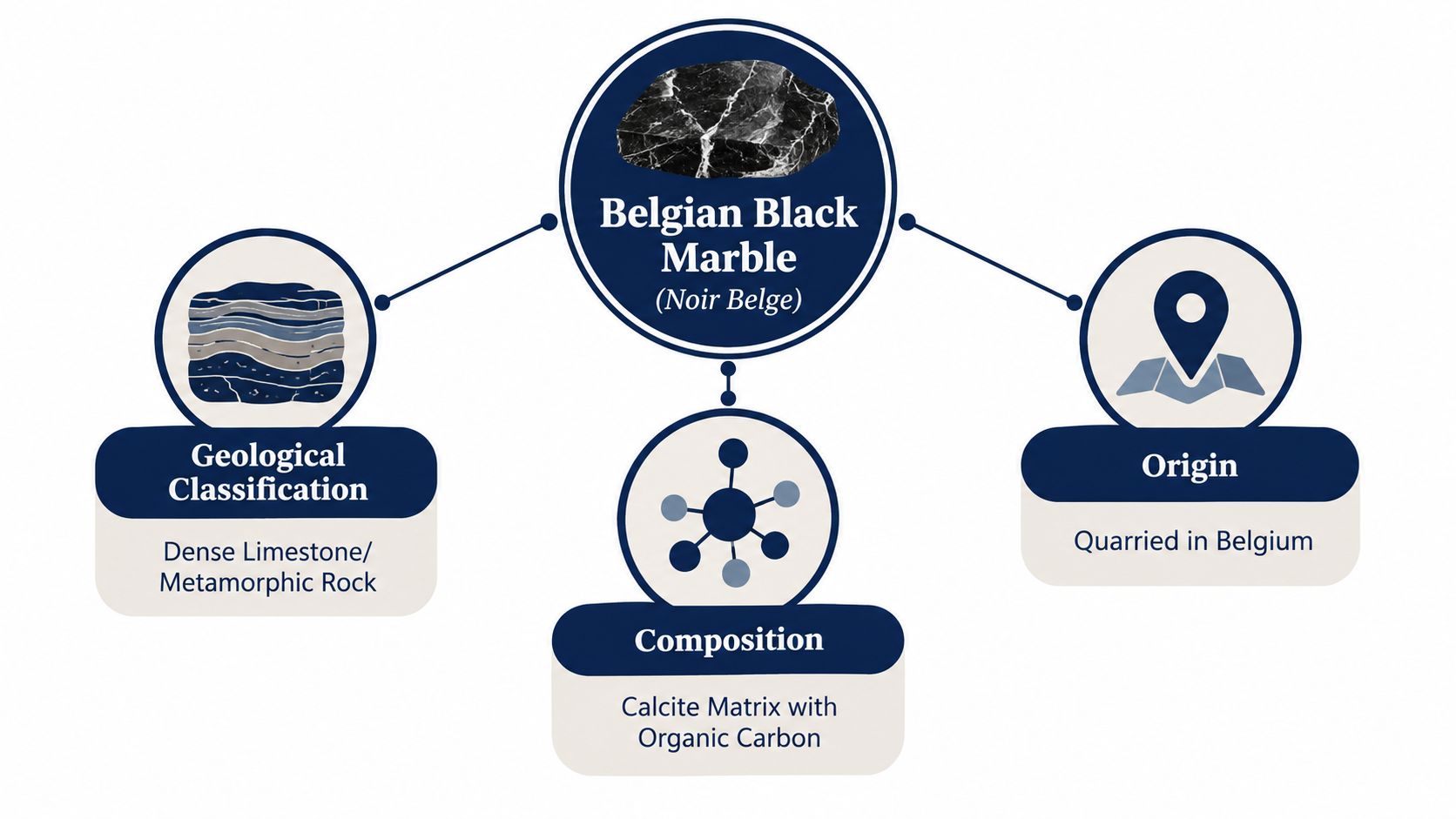
Belgian Black Marble, commonly sold as Noir Belge, is a collective commercial name for exceptionally dark, fine-grained black limestone quarried at several locations in Belgium. In strict geological terms, it isn't metamorphic marble. It's a compact calcareous sedimentary stone, and that distinction affects how you specify, finish, clean, and maintain it.
Some deposits belong to the Frasnian stage of the Upper Devonian, approximately 360 million years old, with the principal geological setting associated with the northern margin of the Namur sedimentary basin. Other Belgian black limestone varieties come from Upper Devonian Frasnian to Lower Carboniferous Viséan formations across Wallonia, including Hainaut, Namur, and Liège. The geological background explains the stone's compact texture, but it doesn't make every slab identical.
Specify the material correctly
For an Indian project, write the specification as imported Belgian black limestone, Noir Belge, followed by the exact quarry or bed where available. Don't use “black marble” as if it identifies one uniform product. India's Abu Black marble from Rajasthan and black granite varieties from Andhra Pradesh are commercially and geologically different materials, even when they appear similar in a mood board.
That difference matters in NCR interiors because origin affects mineral composition, polish response, block size, shade consistency, and supply continuity. A fabricator needs to know whether you're approving a Belgian limestone, an Indian marble, or a granite substitute. Each material behaves differently at the edge, during polishing, under acidic contact, and across large installed areas.
Practical rule: Approve Belgian Black as a specific quarry-controlled material, not as a generic colour called “black marble.”
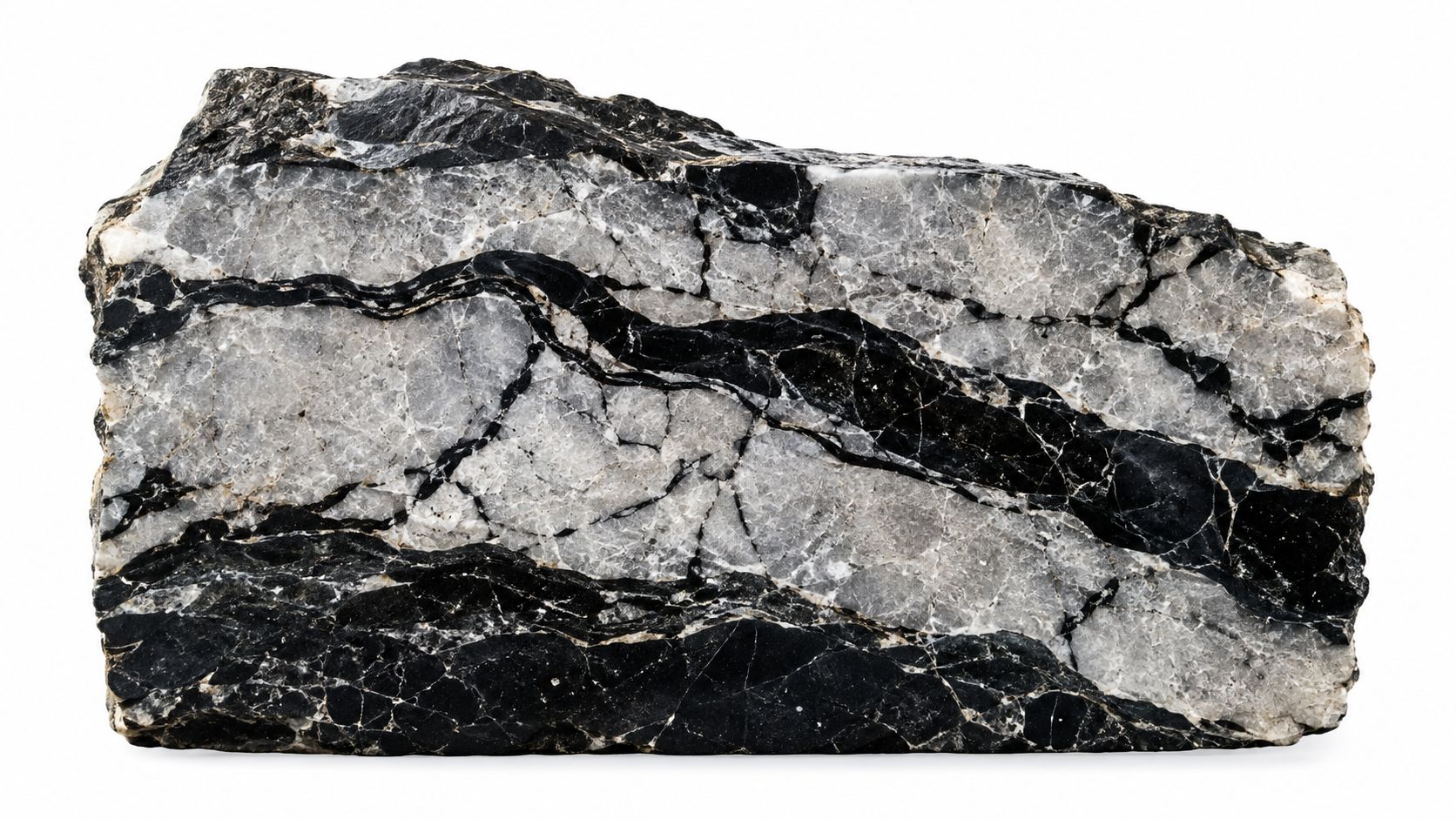
A showroom sample can also mislead you. Freshly cut stone may appear grey or blue-grey because the dark visual effect develops strongly during polishing. Judge the finished surface, under lighting that resembles the actual room, before you commit to the slab quantity.
How the Stone Got Its Look
Belgian Black's colour comes from a very fine micritic calcite matrix containing organic carbon. Its dense, fine-grained carbonate structure accepts polishing differently from many black granites, producing a controlled, deep-looking surface rather than a granular reflection.
As noted earlier, sawn, honed, and polished finishes can show the same limestone with markedly different visual depth, so approve the finish specified for the project rather than judging an unrelated sample.
The material is not one fixed visual formula. Belgian black limestones occur in different formations across Wallonia, and commercial varieties can vary in tone, fossil content, texture, and response to finishing. Some beds contain visible fossil traces within the dark matrix, while others remain quieter and more uniform. Those differences affect whether a surface reads as architectural and consistent or more geologically active.
Finishing response also varies between formations. A polished face may sharpen fossil detail and increase visual contrast, while a honed or brushed treatment can make the surface calmer and reduce reflection. Confirm the intended finish on a representative slab, particularly for large NCR interiors where daylight, warm artificial lighting, and broad wall planes will reveal variation.
Don't confuse it with Indian black stones
Put a Belgian sample beside Abu Black marble or black granite from Andhra Pradesh and compare more than colour. Check grain, reflection, edge finish, movement, polish depth, and changes under side lighting. Belgian Black generally presents as a fine, quiet dark limestone. Indian alternatives may show different mineral structure, grain, veining, and reflective behaviour.
The right comparison is the stone's appearance and performance in the intended room. Belgian Black suits a formal wall, fireplace, vanity front, or carefully controlled hospitality interior. For a heavily used worktop, silica-rich granite or engineered quartz may be the more practical specification.
Fossil content and bed direction also affect slab planning. Ask the fabricator whether adjoining slabs can be book-matched before approving the layout, because natural pattern continuity depends on how the block was split and which faces were selected.
Where Belgian Black Performs Best in a Project
Belgian Black rewards controlled applications. It looks strongest where the design can protect the surface from aggressive chemicals, impact, and constant abrasive use.
Best applications
Feature walls and fireplace surrounds are the safest high-value uses. A polished panel can create a dark architectural plane without exposing the stone to the daily spills that a kitchen worktop receives. Use generous slab layouts where possible, keep joints deliberate, and coordinate the panel with the lighting rather than relying on a bright showroom spotlight.
Decorative joinery and wall cladding also suit the material. It works well as a fireplace lining, reception backdrop, lift-lobby accent, bar front, or selected wall panel. Thin visual details matter here. A clean arris, small eased edge, or restrained mitre usually looks more considered than an elaborate profile that competes with the dark surface.
Bathroom vanity fronts and splashback panels are appropriate when the installation team controls water, sealant, and cleaning products. Keep the stone away from direct contact with acidic bathroom descalers. Plan tap penetrations and cut-outs carefully, because dark polished surfaces show chips and edge damage clearly.
Uses that need a stricter brief
Floors can work, particularly in lower-to-moderate exposure areas, but finish selection is critical. A polished floor shows reflections, fine scratches, footprints, and etching more readily than a honed surface. In a Gurugram home or hospitality project, test the stone beside the proposed grout, skirting, natural light, and artificial light before ordering the complete floor.
Kitchens are the difficult case. Belgian Black is a carbonate stone, so lemon, vinegar, bathroom descalers, and acidic cleaners can etch the surface. Dark colour doesn't mean chemical resistance. If the client wants a low-maintenance worktop with frequent food preparation, specify granite or engineered quartz instead, or use Belgian Black only where contact is controlled.
For broader material comparisons in a kitchen specification, review this practical guide to kitchen marble and granite, then return to the project's actual cleaning and exposure requirements.
Site decision: Use Belgian Black for visual authority, not as a default replacement for every black surface.
Match the slab to the room
Large-format walls benefit from consistent lots and carefully planned joints. Vanity fronts need stable edges and properly supported cut-outs. Floors need a finish that disguises normal wear rather than magnifying it. A mock-up should include the actual lighting, grout colour, edge profile, sealer, and adjacent materials.
In an NCR project, also account for dust, construction traffic, hard-water deposits, and housekeeping habits. The stone can perform well, but only when the installation and cleaning brief treats it as limestone.
Finishes and Colour Palettes That Make It Sing
Finish changes Belgian Black more dramatically than many buyers expect. Polished gives the deepest black appearance and the strongest reflection, which makes it effective for feature walls, fireplace surrounds, bar fronts, and formal vanity panels. The same clarity also reveals scratches, fingerprints, water marks, and acid etching more readily.
Honed reduces glare and produces a softer, more grey-black surface. It's the better choice for floors, understated wall cladding, and rooms where natural light changes throughout the day. Leathered introduces tactile texture and can make minor surface marks less visually dominant, but the texture still needs to be approved in person because it can alter colour depth and cleaning behaviour.
For a deeper explanation of the practical distinction, compare honed and polished marble finishes. The decision should follow the room's exposure and lighting, not a preference formed from one glossy sample.
Build the palette around the finish
Warm brass and bronze bring out the depth of a polished surface. Pale oak, muted plaster, and warm off-white paint prevent a black wall from making a room feel severe. Travertine introduces a porous, earthy counterpoint, while white marble creates a sharper monochrome composition.
For bathroom planning, these black bathroom tiles ideas are useful for seeing how dark surfaces work with pale grout, metalware, and lighter wall finishes. Belgian Black needn't dominate every plane. It often works better as a controlled anchor with quieter surrounding materials.
| Finish | Visual character | Best suited to | Recommended companion |
|---|---|---|---|
| Polished | Deep black, reflective, formal | Feature walls, fireplace surrounds, vanity fronts | Warm brass, white marble, soft plaster |
| Honed | Low-glare, softer grey-black, restrained | Floors, bathroom walls, broad cladding | Pale oak, travertine, brushed metal |
| Leathered | Tactile, textured, visually forgiving | Selected counters and decorative panels | Natural timber, muted stone, bronze |
Choose the palette after viewing a finished sample in the intended room. A polished slab under cool white lighting can look much harder than the same slab beside warm lighting and pale oak. The final approval should include the actual grout, sealant, adjacent paint, and hardware.
Sourcing, Quarry Varieties, and How to Verify Quality
The phrase Belgian Black covers multiple quarry varieties, not one standardised quarry product. A comparative scientific study examined five varieties, Golzinne, Dinant, Theux, Basècle, and Lives, and identified 16 petrographic microfacies, reflecting different depositional environments. That finding gives buyers a practical reason to stop treating a marketing name as a full material description. The scientific overview of Belgian Black varieties explains why quarry-level identification matters.
Ask for a traceable slab
Before approving the material, ask the supplier for:
- Quarry and bed designation: “Belgian Black” is not enough for a demanding project.
- Block or lot identification: The slab should be traceable back to the supplied production group.
- Polished control sample: Approve the finished appearance, not only a sawn piece or digital image.
- Slab-by-slab inspection: Check shade, fissures, filled areas, edge integrity, and surface consistency.
- Matching production: Keep visible areas from the same lot where the design requires continuity.
The study found generally very low, sometimes slightly negative magnetic susceptibility, with Golzinne as an exception. That technical distinction isn't a showroom selection tool by itself, but it reinforces the central point: named varieties can differ in measurable ways.
Test the supplied lot when the application demands it
For large-format flooring, stairs, busy commercial areas, or areas exposed to repeated loading, request independent testing of the supplied lot for water absorption, bulk density, flexural strength, and abrasion resistance. Don't substitute a generic technical sheet for tests connected to the actual material being delivered.
A serious NCR approval process should include a full mock-up. Combine the selected slab, finish, grout, edge profile, lighting, sealers, and installation method in one sample area. If the project is in Gurugram, inspect the slabs in person rather than approving from a photograph. Black stone exposes visual inconsistencies quickly, and cutting cannot correct a poor initial selection.
Care, Sealing, and Long-Term Performance
Belgian Black needs a maintenance plan because it is a carbonate limestone. Lemon, vinegar, bathroom descalers, and acidic cleaners can etch the surface, even when the stone appears visually dense and highly polished. Specify neutral-pH cleaning from the start and give the housekeeping team a written product list.
Before installation, apply an appropriate impregnating sealer after confirming compatibility with the selected finish. Sealing won't make the stone acid-proof, and it won't prevent every mark, but it can support stain resistance when the surface is maintained correctly. Keep the sealer off adjacent timber, metal, and painted surfaces during application.
Give the site team a short routine
- Clean gently: Use a pH-neutral stone cleaner and a soft cloth or mop.
- Blot spills quickly: Don't let tea, wine, oils, citrus, or cleaning chemicals sit on the surface.
- Avoid improvised products: Bathroom descaler, vinegar, lemon-based cleaners, and abrasive powders are poor choices.
- Inspect the sealer: Check exposed areas periodically and reapply according to actual staining and water behaviour.
- Treat marks professionally: Minor dull spots may need controlled honing or repolishing rather than aggressive scrubbing.
Hard-water deposits require care because scraping or acidic removal can damage the limestone. For a practical reference, review this guide to hard-water stains on marble and coordinate any treatment with a stone professional.
Belgian Black can age well when the finish, cleaning products, and exposure are matched. It won't tolerate casual acid use or neglected spills indefinitely, so put the maintenance instructions into the handover documents rather than relying on verbal advice.
Varun Marbles can help you compare Belgian Black with suitable Indian stones, granite, engineered quartz, and other natural materials, then coordinate slab selection, fabrication, edge profiling, and installation for an NCR project. Visit Varun Marbles in Gurugram to inspect full slabs and approve the finish under real project conditions before you place the order.