
Antique White Marble: Uses, Finishes, and Care Guide

You're standing in a marble showroom with several pale slabs propped against the wall. One dealer calls a warm, lightly veined stone “antique white”, while the next yard uses the same label for a brighter slab with a cooler background. Both may be selling genuine natural marble, but the name alone won't tell you how either slab will behave under turmeric, hard water, cooking oil, or daily foot traffic.
That's the practical issue with antique white marble in an Indian interior. Its appeal comes from a soft, aged appearance and a long quarrying heritage, but its success depends on matching the finish and application to the household's maintenance capacity. A well-selected slab can give floors, walls, and feature surfaces a depth that manufactured materials struggle to reproduce. A poorly specified countertop can become a record of every spill and cleaning mistake.
Table of Contents
- What Antique White Marble Actually Is
- Origin and Indian Quarrying Heritage
- Finish Options and Where Each One Works
- Application Zones for Floors, Walls, and Countertops
- Antique White Marble Compared With Quartz and Denser Stones
- Maintenance Rhythm for Indian Homes
- Stains and Etches and How to Respond
- Inspection Checklist Before You Buy the Slab
- Quick Glossary of Marble Specifications
- Choosing the Right Marble for Your Project
What Antique White Marble Actually Is
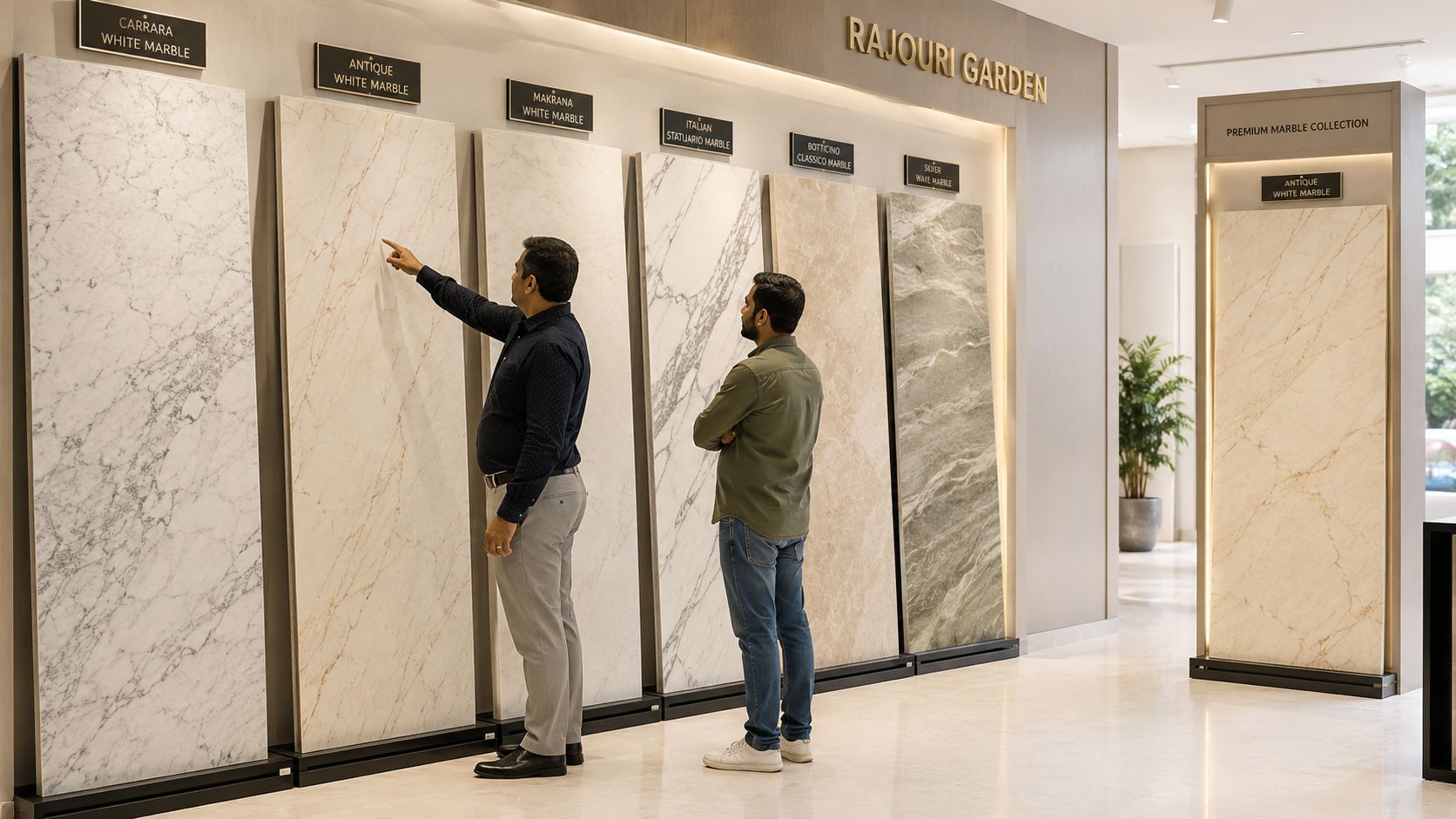
At a showroom in Rajouri Garden or Banjara Hills, you may see six slabs sold under the same trade name. Antique white marble generally refers to a warm off-white natural marble, commonly associated with the Makrana quarries of Rajasthan, with gentle grey or beige movement and a slightly crystalline surface. The word “antique” describes the stone's softened, aged visual character. It doesn't mean the slab has been reclaimed from an old building.
Makrana marble is primarily a calcium carbonate stone, and its over 98% calcium carbonate content is frequently cited as part of the reason for its brightness and established use in monuments and premium interiors, as documented in this background on the marble associated with the Taj Mahal. That composition also explains the material's sensitivity to acids. Lemon juice, vinegar, and harsh bathroom cleaners can react with the surface, leaving a dull mark even when the stone hasn't changed colour.
The properties that control the decision
For Indian-market selection, three characteristics deserve more attention than the label:
- Composition: The calcium carbonate base gives marble its polishability and luminous appearance, but it also makes acid exposure a real concern.
- Water absorption: Industry summaries of IS 1130 cite a maximum benchmark of 0.4% water absorption for white marble, although actual slabs and grades should be verified through testing and supplier documentation. The Indian marble standards overview explains why this figure matters for kitchens, bathrooms, and high-use areas.
- Hardness: The same reference cites a minimum Mohs hardness of 3 for the relevant Indian-market benchmark. Marble remains softer than quartz and can scratch from grit, metal objects, or careless cutting.
That combination makes antique white marble especially convincing on living-room floors, bedroom floors, vanity walls, backsplashes, and feature panels. It can work on a countertop, but only where the owner accepts prompt spill cleanup, regular sealing, and the possibility of natural patina.
Origin and Indian Quarrying Heritage
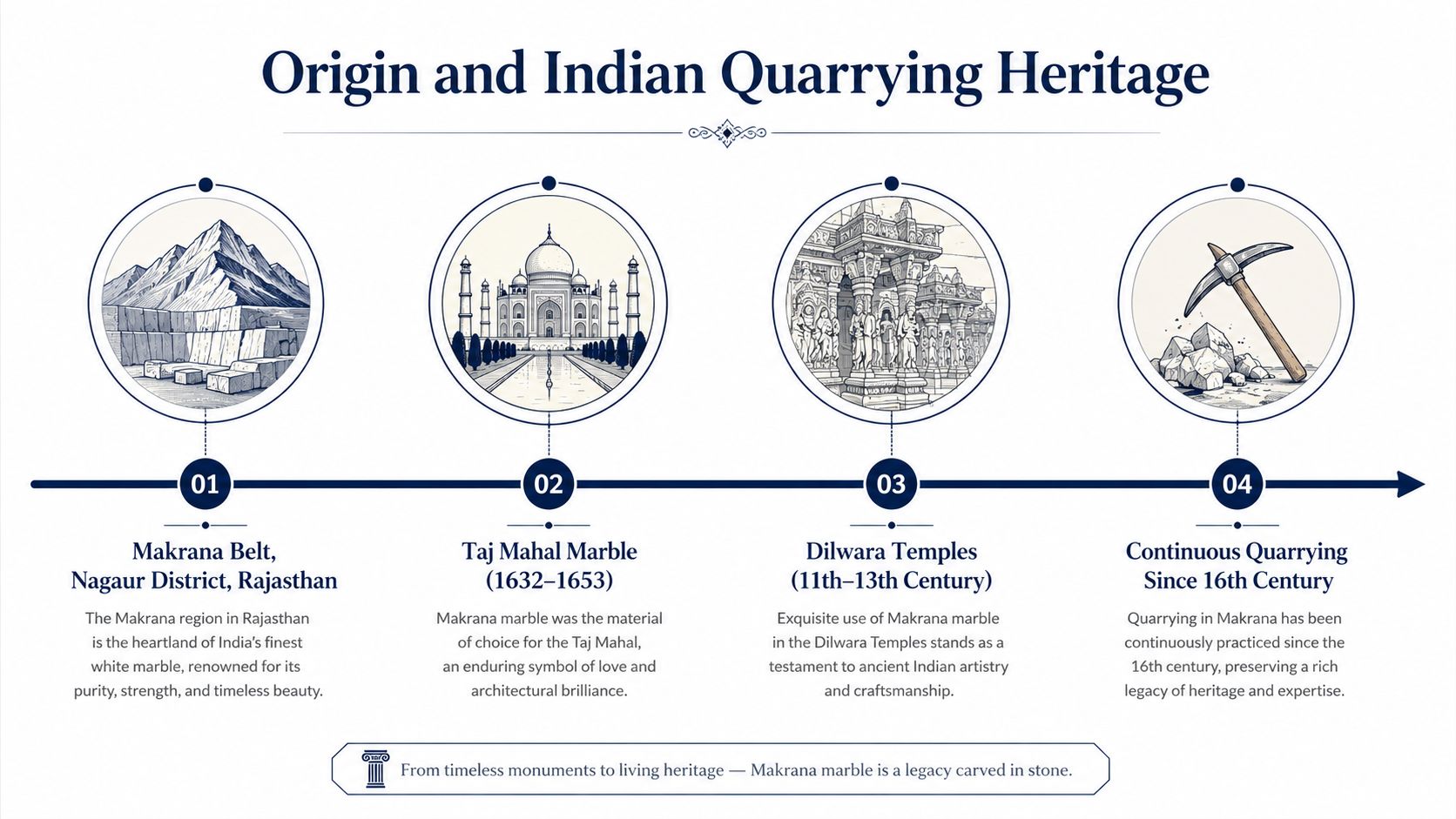
A heritage-inspired interior can look convincing on paper yet perform poorly if the stone's origin and condition are ignored. Makrana in Rajasthan remains India's best-known source of antique white marble. Its quarries have been worked for more than 400 years, with quarrying associated with the Mughal era. The Taj Mahal was built with Makrana white marble between 1631 and 1648 under Emperor Shah Jahan. These details appear in the account of Makrana marble's architectural heritage.
For conservation-led, hospitality, and heritage-inspired interiors, that provenance has practical value. Antique white marble belongs to an established Indian quarrying category rather than a recent decorative imitation. Its warm tone and crystalline response to light can support a restrained scheme, provided the project team accepts natural variation and the upkeep that marble requires.
Why the trade name causes confusion
“Antique white” is not a single geological classification. Indian yards, processors, and dealers may use it for a tonal family, a specific lot, or a surface treatment that gives marble a less formal appearance. Slabs sold under the same name can differ in background warmth, crystal size, vein density, resin treatment, and finish.
The Indian Bureau of Mines reported Rajasthan marble production of 8,252,000 tonnes in 2018–19, 10,621,000 tonnes in 2019–20, and 16,159,347 tonnes in 2020–21. The same report recorded Rajasthan as contributing about 89% of India's marble output value in 2014–15. It also estimates India's total marble market at around 35 million tonnes per year, with imports of about 800,000 tonnes. The production and market context is set out in the Indian Bureau of Mines marble report.
Before approving a lot, request the quarry origin, test report, slab thickness, resin disclosure, finish, and intended application. The Indian marble collection offers a useful reference for available options, but selection should be based on the actual slab, not its trade name alone.
Finish Options and Where Each One Works
Finish changes the risk profile more than many buyers expect. The same antique white marble can feel refined and easy to live with in a honed finish, or become unnecessarily vulnerable when highly polished and installed in a wet, high-traffic area.
| Finish | Slip Resistance | Stain Visibility | Sealing Frequency | Best Suited To |
|---|---|---|---|---|
| Polished | Low when wet | High, especially for etches and rings | Most frequent | Lobby walls, low-traffic feature panels, dry decorative floors |
| Honed | Moderate, but requires care in wet zones | Lower than polished for light scratches and etches | Regular | Living rooms, bedrooms, dining floors, dry feature walls |
| Leathered | Better grip than polished | Moderate, with texture masking fingerprints | Regular | Bathroom floors, kitchen worktops, utility areas |
| Brushed or antiqued | Generally good grip because of texture | Lower for small marks, but grout dust collects in texture | Regular and detail-dependent | Vertical feature walls, heritage-style panels, dry exterior-adjacent areas |
Polished
Polishing brings out the marble's veining and makes the surface reflect both daylight and artificial lighting. It's effective on a feature wall, lift lobby wall, vanity backdrop, or low-traffic decorative floor where appearance carries more weight than grip.
It's a poor choice for a shower floor. Water reduces traction, while the reflective surface makes every water spot, dull patch, and acid etch easier to see. Use it vertically or in areas where standing water and abrasive grit are limited.
Honed
Honing produces a matte-satin surface. It softens glare and hides small scratches more effectively than a mirror finish, which makes it a sensible default for living and bedroom floors. Barefoot traffic also tends to feel more comfortable on honed marble than on a highly reflective polished surface.
Honed marble still needs sealing and sensible cleaning. It won't make the stone impervious to oil, turmeric, or acidic products, and it shouldn't be treated as a maintenance-free option.
Leathered and brushed surfaces
A leathered finish introduces a subtle tactile quality and can reduce the visibility of fingerprints on a countertop. It works well where grip matters, but its texture can collect dust and residue if the installer leaves deep pores or poorly finished edges.
Brushed or antiqued marble has a stronger weathered character. Specify it mainly on vertical surfaces and feature walls, not on a food-preparation surface where textured areas can hold crumbs, grease, or cleaning residue.
Practical rule: Choose the finish by the worst exposure in the room, not by the best-looking sample under showroom lighting.
Application Zones for Floors, Walls, and Countertops
Antique white marble rewards controlled exposure. It looks most relaxed in rooms where staining agents are limited and cleaning can remain simple. It becomes demanding when the surface sits directly beside cooking, standing water, abrasive grit, or acidic products.
| Application Zone | Recommended Finish | Traffic / Exposure | Maintenance Trade-off |
|---|---|---|---|
| Living and bedroom floors | Honed or polished | Light to moderate foot traffic | Good visual payoff, regular dust control and sealing |
| Kitchen countertops | Leathered or honed | Frequent food, oil, heat, and spill exposure | Requires disciplined habits and acceptance of patina |
| Bathroom floors | Leathered or brushed | Wet, barefoot traffic | Better grip, but textured surfaces need thorough rinsing |
| Bathroom walls | Polished or honed | Intermittent moisture, mainly vertical | Lower physical wear, monitor hard-water deposits |
| Kitchen backsplash | Polished or honed | Vertical splash and grease exposure | Strong use case, wipe cooking residue promptly |
| High-traffic commercial lobby | Denser stone or porcelain | Abrasive grit and sustained traffic | Antique white may show wear and require more intervention |
Floors
Living rooms, bedrooms, and quieter dining areas are the safest flooring applications. A honed finish gives a calm, tactile appearance and hides minor wear, while polished marble creates more reflection and makes the veining prominent. Place grit-control mats at entrances and dry mop regularly, because sand and dust can scratch a softer stone during repeated walking.
Outdoor paving is a different proposition. Weather, dirt, standing water, and changing surface conditions make antique white marble harder to manage, particularly when the selected finish becomes slippery when wet.
Kitchens and bathrooms
A kitchen backsplash is one of the strongest uses because the marble stays vertical and can be wiped soon after a splash. Countertops are more conditional. They require immediate action around turmeric, coffee, citrus, cooking oil, and hot cookware, plus a willingness to accept small changes in tone over time.
Bathroom walls perform well above the main splash line and behind vanities. For bathroom floors, choose a leathered or brushed finish and pay close attention to drainage, grout detailing, and hard-water residue. Don't use polished marble just because it looks brighter in a sample.
A beautiful countertop that demands habits your household won't maintain is the wrong countertop, regardless of the slab's colour.
Antique White Marble Compared With Quartz and Denser Stones
The practical comparison is not natural versus manufactured. It's aesthetic variation versus maintenance tolerance. Antique white marble offers natural depth and movement, while quartz gives a more controlled surface and lower routine exposure to staining.
A key caution concerns the available data. The provided Indian-market benchmark cites maximum water absorption of 0.4% for white marble, while the proposed range in some trade descriptions may vary by lot and should not be treated as a universal value. Ask for the actual test report rather than assuming every slab shares the same performance.
| Property | Antique White Marble | Engineered Quartz | Denser Indian Marble |
|---|---|---|---|
| Surface character | Natural variation, crystalline depth, individual slab identity | Controlled pattern and colour consistency | Natural variation, often with a denser visual and physical character |
| Acid sensitivity | High because of calcium carbonate composition | Generally less vulnerable to surface etching from household acids, though product-specific guidance applies | Varies by mineral composition, test the selected slab |
| Scratch behaviour | Softer, so grit and sharp objects require care | Harder than marble and generally more scratch-resistant | Varies by stone and finish |
| Sealing | Requires planned resealing | Usually minimal routine sealing | Depends on absorption and supplier guidance |
| Best fit | Floors, walls, backsplashes, statement surfaces, disciplined kitchens | Heavy-use worktops and low-maintenance bathrooms | High-use applications where the selected grade supports the exposure |
| Main compromise | Upkeep and patina | Less natural variation and possible pattern repetition | May offer a different colour or pattern than the brief requires |
The comparison of quartz slabs for modern kitchens is useful when a project prioritises low routine maintenance. For a kitchen that sees constant masala preparation and limited cleaning discipline, quartz is usually the more forgiving specification.
Choose antique white marble when the natural slab is central to the design and the owner accepts sealing, prompt spill response, and gradual character. Choose quartz when the surface must remain visually consistent under heavy use with minimal intervention. Compare denser Indian marble only after reviewing the specific stone's absorption, hardness, finish, and test documentation.
Maintenance Rhythm for Indian Homes
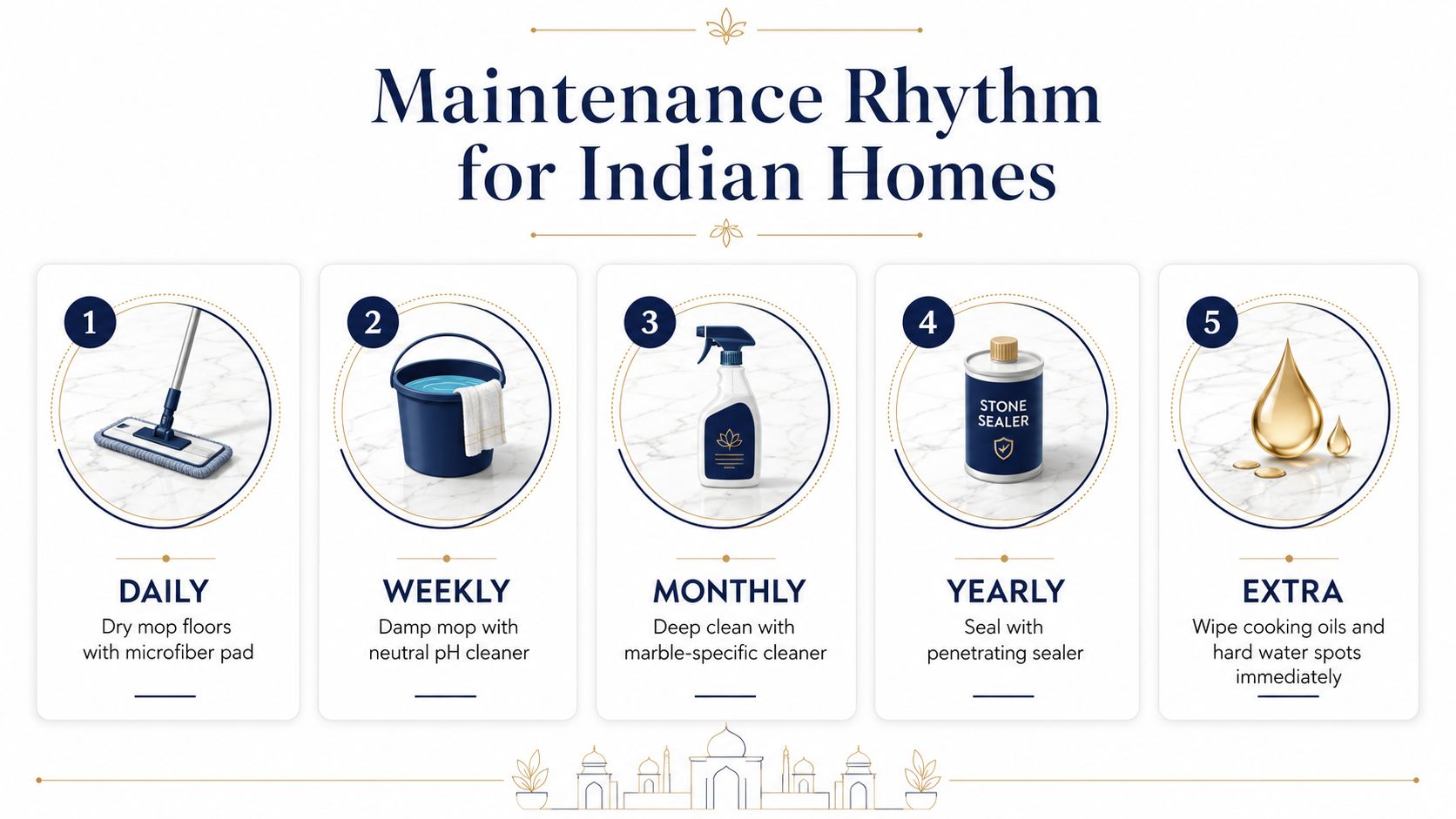
Indian homes combine dust, humidity, cooking oils, hard water, and frequent cleaning. Marble care works best as a small routine rather than a periodic rescue operation.
Daily care
Dry mop marble floors with a clean microfiber pad. The aim is to remove abrasive grit before it gets walked across the surface. On countertops, wipe spills with a damp cloth and a pH-neutral cleaner. Never reach for vinegar, lemon-based sprays, or acidic descalers because the calcium carbonate surface can etch.
Use coasters under glasses, trivets under hot cookware, and felt pads beneath decorative objects. These simple barriers prevent rings, thermal stress, and avoidable scratches.
Weekly and monthly care
Once a week, damp mop floors with a marble-safe detergent, such as a suitable Taski product or diluted neutral soap, following the product instructions. Rinse thoroughly and dry the floor so hard-water residue doesn't remain as a cloudy film.
Each month, inspect grout lines, joints, the area beside the kitchen sink, and the bathroom vanity. A dull patch may be an etch rather than a stain. A darker patch that appears after moisture may indicate absorption or an ineffective seal.
Yearly sealing
Plan an annual seal review, especially before the monsoon. A fluoropolymer or impregnating sealer, such as Fila MP90 or Akemi Anti-Fleck, may be suitable when compatible with the stone and finish. Always follow the manufacturer's instructions and test a concealed area first.
To check whether the seal is still working, place a small amount of water on an inconspicuous section. If the surface beads, the protection is holding. If the stone darkens within five minutes, discuss resealing with the installer or stone-care professional.
For a visual demonstration of a practical cleaning sequence, use the following video:
Stains and Etches and How to Respond
Indian kitchens and bathrooms expose white marble to a predictable list of problems. Turmeric paste, tadka oil, soap scum, hard-water rings, lime juice, vinegar, bleach, Harpic, and ammonia-based products each require a different response.
| Staining Agent | First Response | Treatment Method | Recovery Expectation |
|---|---|---|---|
| Turmeric paste | Blot and lift without rubbing | Use a suitable poultice after testing, professional help may be needed for deep penetration | Often recoverable, but deep colour can remain |
| Cooking oil | Blot immediately | Poultice treatment for absorbed oil | Better if treated promptly |
| Acidic splash | Rinse with clean water immediately | Re-polish or refinish a dull etched area | Colour may remain unchanged, but gloss can require restoration |
| Soap scum | Wipe and rinse with neutral cleaner | Marble-safe cleaning and gentle mechanical removal | Usually manageable with regular care |
| Hard-water ring | Remove standing water and wipe dry | Use a non-acidic stone-safe method | Surface deposits may lift, etching may need honing |
| Bathroom mildew | Clean gently and ventilate | Consider hydrogen peroxide after compatibility testing | Usually manageable, but joints may need separate treatment |
Treat a wet spill by blotting, not rubbing. Oil should be addressed within 30 minutes, while acid splashes should be rinsed within 10 minutes to reduce the chance of a visible surface reaction. Baking soda and acetone are sometimes used in poultice procedures for turmeric and oil, but the mixture, dwell time, and ventilation must be handled carefully, preferably by a stone-care professional.
An etch is typically a dull loss of surface reflection without a true colour change. A stain is discolouration beneath or within the surface. Cleaning won't restore an etched polish, and polishing alone won't remove a deep stain.
Read the guidance on polished marble countertops before committing to a kitchen worktop, particularly if your household uses acidic ingredients frequently.
Inspection Checklist Before You Buy the Slab
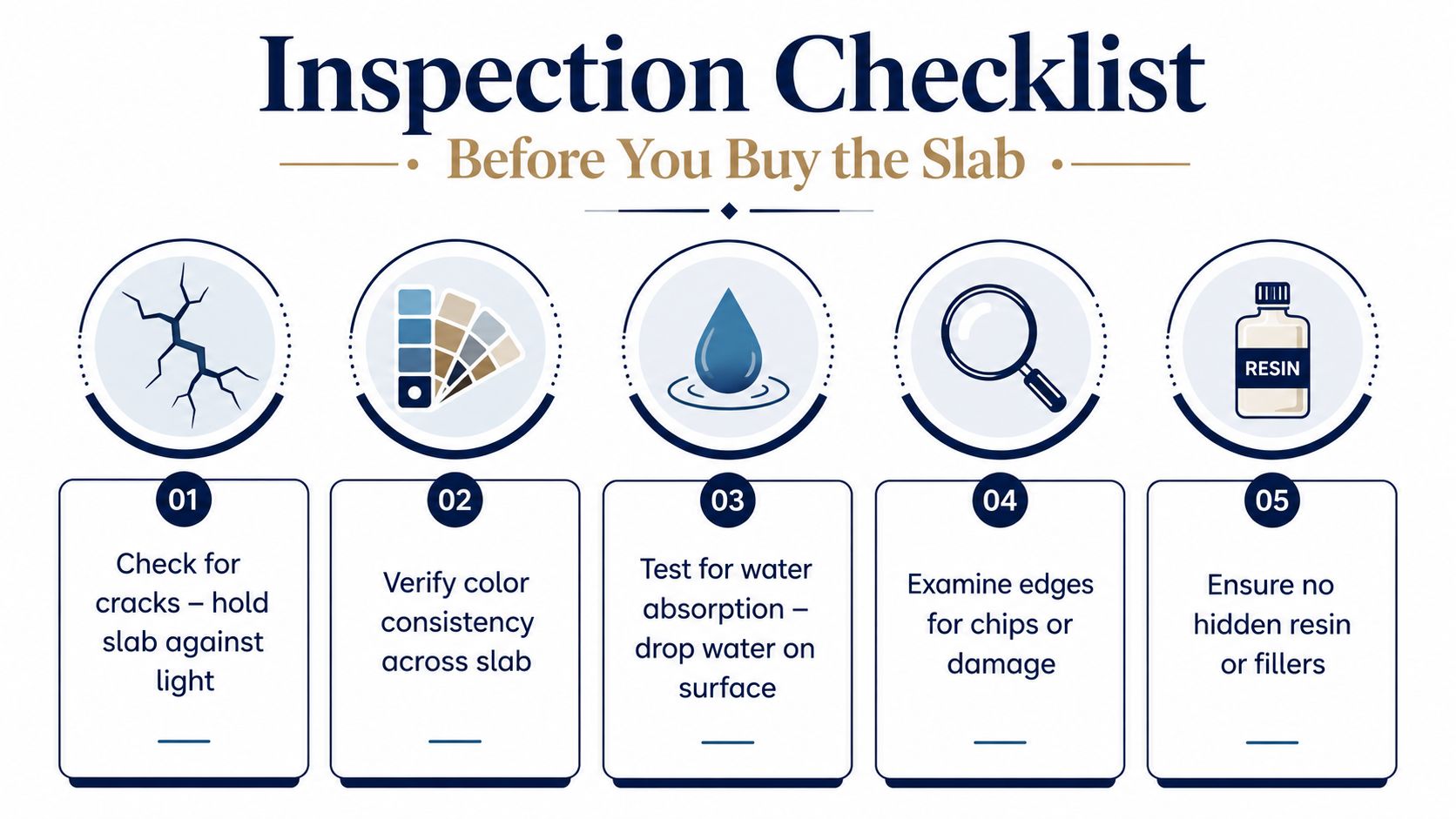
A small sample can misrepresent antique white marble. Approve the selected slab only after checking its full background, vein direction, filled fissures, and edges. Natural variation is part of the material, but it must still suit the room and cutting plan.
Use this sequence at the supplier yard:
- View the full slab: Inspect the warm white background from end to end. Mark abrupt colour changes, heavy grey patches, and areas that may conflict with the layout.
- Inspect both faces and edges: Ask to see the reverse and all edges. Hairline cracks and repairs can show more clearly there than on a polished face.
- Check the surface under angled light: Look for resin fill, patching, uneven reflection, and polishing that may be concealing repairs.
- Confirm origin and lot details: Match the quarry or lot mark on the reverse with the declared origin. A trade name alone does not establish Makrana provenance.
- Ask for test documentation: For white marble, the Indian-market IS 1130 reference lists a maximum water absorption benchmark of 0.4%, minimum Mohs hardness of 3, and minimum specific gravity of 2.5. Verify these figures against the IS 1130 document, not only a supplier summary.
- Review dimensions and finish: IS 1130 specifies slab lengths of 70 to 250 cm, widths of 30 to 100 cm, and thicknesses of 20 to 150 mm, with permitted sand or abrasive, honed, and polished finishes. The standard covers the relevant block, slab, and tile requirements.
- Plan the cut before payment: Place the kitchen, vanity, or floor layout over the actual slab. A strong vein across a sink cut-out, or a crack near a narrow edge, can make an attractive piece unsuitable.
Ask for the lot report, inspect the installed-use face, and record agreed tolerances before fabrication. These checks reduce surprises, but they do not remove marble's natural porosity or future upkeep requirements.
Quick Glossary of Marble Specifications
| Specification Term | Plain Definition | Typical Antique White Range | Practical Consequence |
|---|---|---|---|
| Calcium carbonate content | The principal mineral component in marble | High, with Makrana marble often described as over 98% calcium carbonate | Explains polishability and acid sensitivity |
| Mohs hardness | A scratch-resistance scale | Around 3 to 4 for marble; the cited Indian benchmark is minimum 3 | Protect from grit, knives, and metal abrasion |
| Water absorption | The amount of water the stone can take in | The cited white-marble benchmark is maximum 0.4% | Helps predict staining and sealing needs |
| Specific gravity | Density relative to water | The cited minimum benchmark is 2.5 | Supports material comparison and load planning |
| Flexural strength | Resistance to bending | Supplier test value required | Helps assess slab suitability for spans and thin applications |
| Abrasion resistance | Resistance to wear from rubbing grit | Supplier or laboratory value required | Important for busy floors and commercial circulation |
| Modulus of rupture | A measure of breaking resistance under bending | Supplier test value required | Helps identify whether a slab suits a particular fabrication detail |
Treat the “typical range” column as a screening aid, not a substitute for a report on the selected lot. Natural stone varies, and the application should be approved against the actual slab's documentation.
Choosing the Right Marble for Your Project
The right choice depends on how the room is used, not only on the colour board.
| Reader Profile | Recommended Finish | Best Zone | Maintenance Commitment |
|---|---|---|---|
| Masala-heavy family kitchen | Honed marble away from the main cooking zone, quartz at the highest-exposure work area | Perimeter counter, backsplash, controlled floor zones | High, with prompt wiping and regular seal checks |
| Design-led living and dining renovation | Polished floor, honed feature wall | Dry floors and vertical panels | Moderate, with grit control and planned sealing |
| Low-touch high-rise bathroom | Polished walls, honed or leathered floor | Vanity wall, dry shower surround, bathroom floor | Moderate, with water removal and neutral cleaning |
| Heritage-focused project | Brushed or antiqued vertical marble | Feature wall, niche, architectural panel | Detail-focused, because texture collects dust |
For a basic budget, prioritise a sound lot and practical finish over dramatic movement. A mid-range project can use antique white marble selectively on floors, backsplashes, or vanity walls. A premium scheme can reserve the most expressive slab for a statement surface, while using quartz or another durable material where daily exposure is hardest.
Confirm the slab, finish, edge profile, and cutting layout with your supplier before fabrication begins. Once the stone has been cut, changing the material strategy becomes expensive and restrictive.
Varun Marbles supplies Indian and Italian marble, engineered quartz, granite, and onyx, with slab selection, cut-to-size fabrication, finishing, and installation coordination. Visit Varun Marbles to review antique white marble and alternative surfaces in person, then match the selected slab to your room's exposure and maintenance routine.